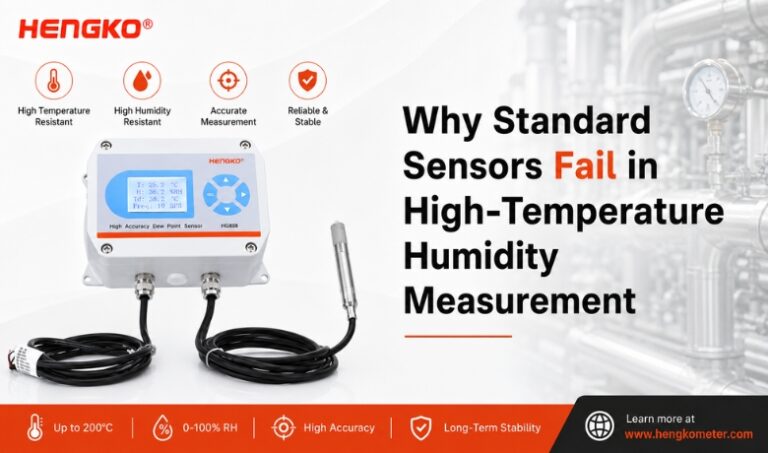
Why Standard Sensors Fail in High-Temperature Humidity Measurement ?

Why Standard Sensors Fail in High-Temperature Humidity Measurement

Why Standard Humidity Sensors Fail in High-Temperature Environments Quick Summary Standard humidity sensors are mainly designed for ambient or moderate industrial conditions. Under sustained high temperatures, steam, contaminants, and repeated thermal cycling, they can suffer from material degradation, measurement drift, condensation damage, and shortened service life. This article explains the most common failure mechanisms and why purpose-built, industrial-grade humidity transmitters are necessary for reliable process control. In This Article 1. Why high-temperature humidity measurement is different 2. Seven reasons standard humidity sensors fail 3. Standard sensors versus industrial transmitters 4. Typical high-temperature applications 5. How to select the right measurement solution 6. Frequently asked questions Key Takeaways ✓ Sustained heat […]

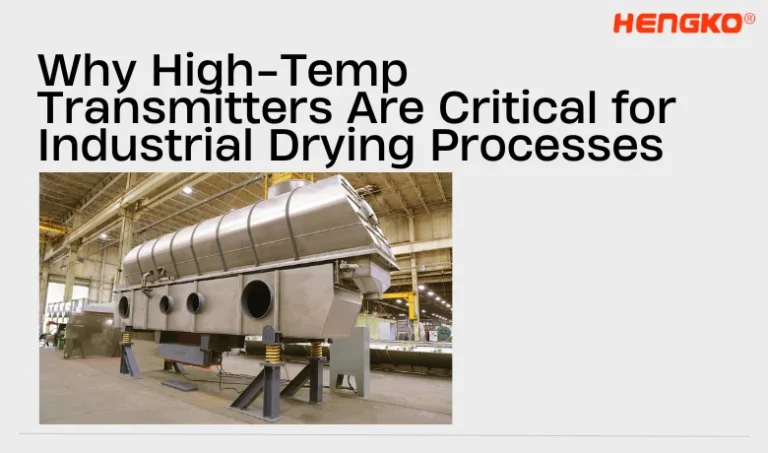
Why High-Temperature and Humidity Transmitters Are Critical for Industrial Drying Processes

How to Monitor Temperature and Humidity in High-Temperature Industrial Drying Processes Quick Summary Industrial drying processes used in pharmaceuticals, food production, chemicals, ceramics, and materials manufacturing require precise control of temperature and humidity. Even small deviations can cause product defects, excessive energy consumption, longer drying cycles, or equipment damage. This guide explains why high-temperature drying environments must be monitored, where sensors should be installed, how industrial transmitters operate, and how the HENGKO HG808-T can integrate with PLC, DCS, and SCADA systems for continuous process control. In This Article 1. Why temperature and humidity monitoring matters in industrial drying 2. What can go wrong without accurate monitoring 3. Where to install […]

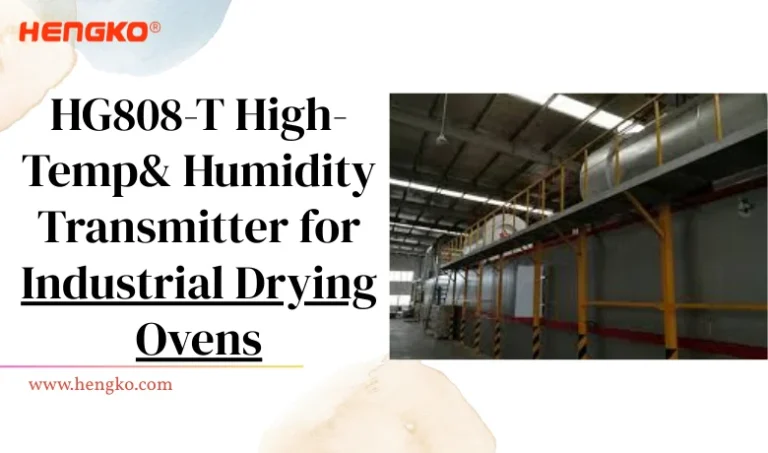
200℃ High-Temperature Humidity Transmitter for Industrial Drying Ovens HG808-T

HG808-T High-Temperature Humidity Transmitter for Industrial Drying Ovens

High-Temperature Humidity Transmitter for 200℃ Industrial Drying Ovens-HG808-T In many manufacturing processes, drying is more than just a step — it’s a decisive factor that directly affects product quality, production efficiency, and energy consumption. Whether you’re drying ceramics, powder materials, food ingredients, coatings, lithium battery materials, or industrial components, temperature and moisture inside the drying oven define how well the final product performs. Yet here’s the challenge: Most humidity sensors simply cannot survive inside a real industrial drying oven. Temperatures rise above 120–150°C, hot air circulates rapidly, and humidity fluctuates sharply during the drying cycle. Under such conditions, traditional sensors fail quickly — drifting, burning out, or delivering unreliable readings. […]

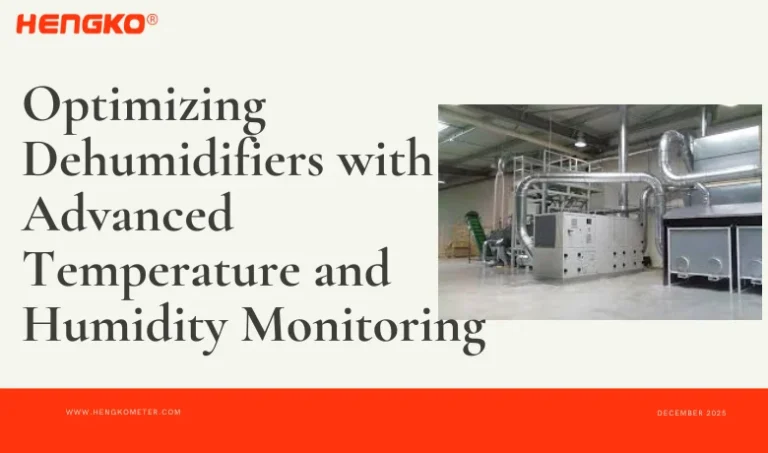
Optimizing Dehumidifiers with Advanced Temperature and Humidity Monitoring

Effective moisture management is essential in facilities where materials, equipment, and processes depend on controlled environmental conditions. While dehumidifiers play a central role, their performance—and efficiency—largely depends on accurate temperature and humidity monitoring. With advanced transmitters providing continuous, real-time environmental data, dehumidifiers can operate intelligently rather than blindly, ensuring consistent protection and optimal operating costs. This article explores why monitoring matters, how it enhances dehumidifier performance, and how high-precision sensors from Hengko elevate moisture-control systems across industries. The Role of Temperature and Humidity Monitoring Temperature and humidity transmitters are the “brains” behind modern dehumidification systems. They continuously measure real-time environmental conditions and feed these signals to the control system, enabling […]

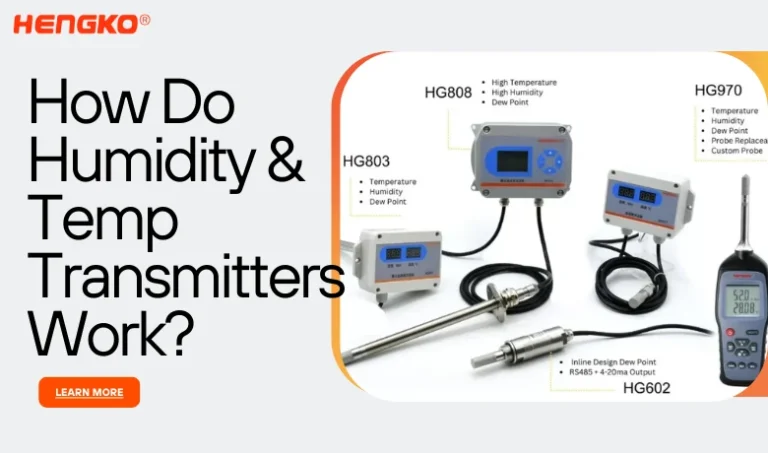
湿度・温度トランスミッタの仕組み

湿度・温度トランスミッタの仕組み

In short, Humidity and temperature transmitters measure and send environmental data to control systems. They are widely used in HVAC, pharmaceuticals, food processing, and cleanrooms where precise conditions are critical. Sensing: Built-in humidity and temperature sensors detect moisture and heat changes. Signal Conversion: The device converts raw signals into standard outputs like 4–20 mA or Modbus. Data Transmission: Data is sent to monitoring or automation systems for real-time control. Introduction In industries, even small changes in temperature or humidity can cause major issues, like product defects in pharmaceutical cleanrooms or static damage in data centers. Unlike basic home sensors, industrial transmitters offer high accuracy, durability, and easy integration with control […]

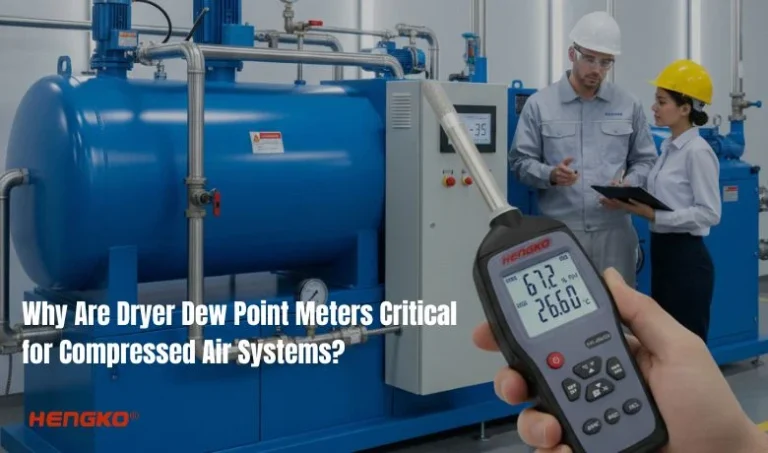
なぜドライヤー露点計は圧縮空気システムにとって重要なのか?

ドライヤー露点計が圧縮空気システムにとって重要な理由

Why Are Dryer Dew Point Meters Critical for Compressed Air Systems? Maybe You always battle hidden moisture in compressed air that can cause corrosion, freezing, and product defects. By installing dew point meters, you detect and stop moisture issues before equipment fails. You can monitor dew point to prevent condensation and protect assets. The HENGKO HG970 series provides continuous dew point readings with 4–20 mA and Modbus RTU outputs, onboard logging, and diagnostics—so you can close the loop for control and energy savings. Here, this guide explains the causes of moisture, how to choose sensors, where to place them, and how to integrate the HENGKO HG970 so you can act […]

湿度トランスミッターを使ったオフィス内の湿度調整方法とは?

あるオフィスゾーンの湿度が高すぎる理由

Why One Office Zone is Too Humid & How a Humidity Transmitter Fixes It Persistent humidity in one office zone can disrupt comfort, increase mold risk, and hurt productivity. Even with your HVAC system running, one area may stay damp due to hidden airflow issues or localized moisture sources. A humidity transmitter acts like a diagnostic tool, revealing real-time, zone-specific data so you can fix problems faster. Why Does Humidity Vary Zone-to-Zone Despite HVAC Efforts? Humidity imbalances plague many offices. HVAC systems often struggle to maintain uniform conditions across all spaces. Zone-specific factors like airflow gaps or uneven heat loads create microclimates. Snippet Answer: Persistent humidity usually comes from uneven […]

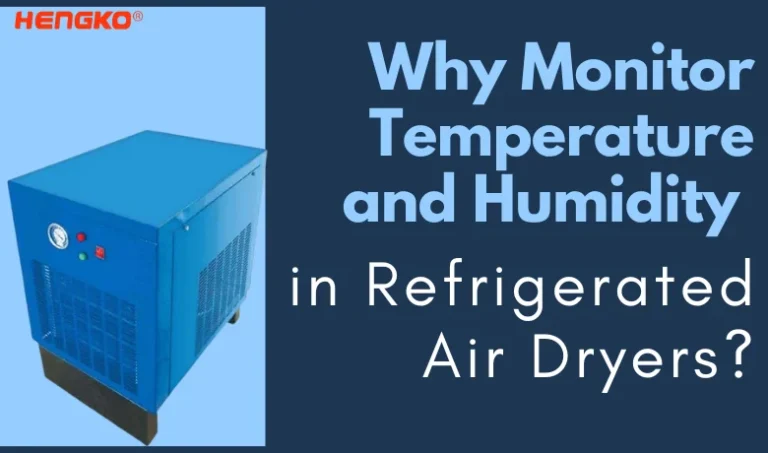
冷凍式空気乾燥機の温度と湿度を監視する理由

はじめに 圧縮空気は、電気、水、ガスと並んで、近代産業における「第4のユーティリティ」と呼ばれることが多い。しかし、圧縮空気システムが直面する最も一般的な問題の1つは湿気です。湿気は未処理の場合、腐食、パイプラインの詰まり、空気圧機器の損傷、製品品質の低下につながります。この問題に対処するため、一般に「コールドドライヤー」として知られる冷凍式エアドライヤが、圧縮空気中の湿気を低減する効率的な手段として広く使用されています。しかし、冷凍式ドライヤーは効果的ですが、その性能は安定した環境制御に大きく依存します。そこで、温度・湿度トランスミッターが活躍します。これらのトランスミッターは、重要なパラメーターを継続的に監視することで、ドライヤーが最適な条件下で運転されることを保証し、両者の安全を守ります。

高精度温湿度モニタリング・デバイスで半導体製造を守る

1.はじめに 半導体産業は、あらゆる製造部門の中でも最も厳しい環境条件の下で操業している。デバイスがナノスケールに微細化し、製造工程がますます複雑化するにつれて、環境パラメータ、特に温度と湿度を正確に制御し続けることは、安定した品質と歩留まりを確保するために不可欠となっています。温度や湿度がわずかに変動するだけでもプロセスの安定性に影響を与え、フォトリソグラフィーのアライメント、エッチング精度、材料成膜にばらつきが生じます。これらは、製品の信頼性、生産スループット、長期的なデバイス性能に影響を与えます。このような課題を考えると、リアルタイムの温湿度モニタリングは単なるベストプラクティスではなく、基本的な要件です。堅牢な環境モニタリングは、プロセスの完全性を維持し、ダウンタイムを削減し、コンプライアンスを確保するのに役立ちます。

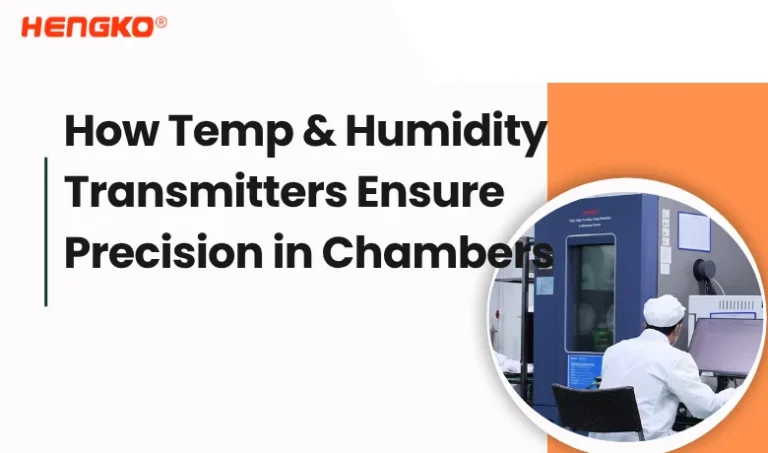
温湿度トランスミッタがチャンバー内の精度を保証する方法

はじめに 環境シミュレーションや信頼性試験の世界において、恒温恒湿槽は、エレクトロニクスや製薬から材料科学や航空宇宙まで、幅広い産業で不可欠なツールとなっています。これらの恒温恒湿槽は、正確に制御された気候を維持するように設計されており、長時間の試験サイクルにおいて安定した温度と相対湿度(RH)を保証します。しかし、何がこのレベルの精度を可能にしているのでしょうか?すべての高性能チャンバーの中核には、重要でありながら見落とされがちなコンポーネント、温度・湿度トランスミッターがあります。温度・湿度トランスミッターは、チャンバーの "センサリー・システム "として、継続的に環境条件をモニターし、リアルタイム・データをコントロール・ユニットに伝え、正確な調整と安定化を可能にします。この記事では、[...]について掘り下げていく。

お問い合わせ

お問い合わせは下記までお気軽にどうぞ: