ブログ
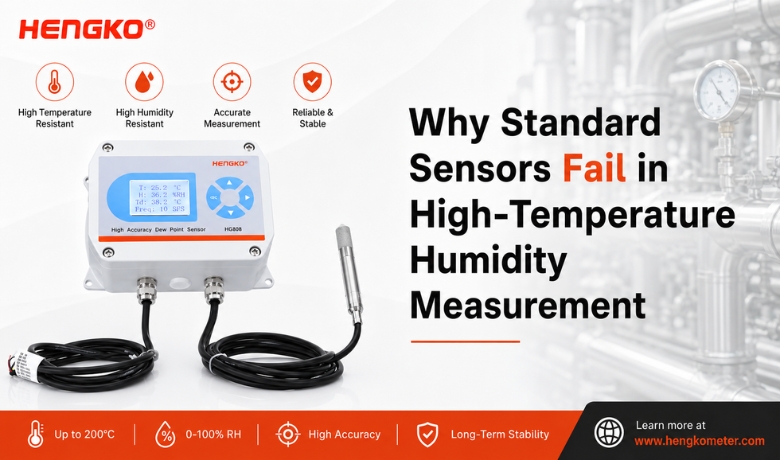
Why Standard Sensors Fail in High-Temperature Humidity Measurement ?
Why Standard Humidity Sensors Fail in High-Temperature Environments Quick Summary Standard humidity sensors are mainly designed for ambient or moderate

地球の最も遠いところから、現代生活を可能にする燃料がやってくる。
ホーム " よくある質問
温度・湿度トランスミッタとセンサの専用サポートをご覧ください。設置に関するガイダンス、トラブルシューティングのヒント、お客様の環境に適したデバイスの選択に関するアドバイスなど、当社の専門家によるサポートは、お客様の気候条件の正確なモニタリングと制御を保証します。
温湿度トランスミッターおよびセンサーは、温度や湿度レベルなど、周囲の環境に関する情報を測定し、送信する装置です。HVACシステム、産業用アプリケーション、気象学、農業、医療用アプリケーションなど、幅広い用途で使用されている。
温湿度センサーにはいくつかの種類があり、それぞれに長所と短所があります。最も一般的なセンサーには以下のようなものがある:
特定のアプリケーションに最適なセンサーのタイプは、アプリケーションの特定の要件によって異なります。考慮すべき要素には、必要な精度、レンジ、出力タイプが含まれます。
温度・湿度センサーの種類を表にまとめました:
| タイプ | 動作原理 | メリット | デメリット |
|---|---|---|---|
| 抵抗性 | 材料の抵抗の変化 | シンプルで安価 | 湿度やその他の環境要因に敏感 |
| 静電容量式 | 一対の電極の静電容量の変化 | 正確、安定 | 抵抗センサーより高価 |
| 熱伝導率 | 気体の熱伝導率の変化 | 非常に正確で安定している | 他のタイプのセンサーより高価 |
| サーモパイル | 一対の異種金属から発生する電圧 | 非常に正確で安定している | 他のタイプのセンサーより高価 |
| 半導体ベース | 半導体材料の電気特性の変化 | 非常に正確で安定している | 他のタイプのセンサーより高価 |
最も一般的な温湿度トランスミッターは以下の4種類である:
アナログ・トランスミッター: これらのトランスミッターは、測定された温度と湿度レベルをアナログ信号に変換する、 電圧や電流など。 この信号は、監視と制御のために遠隔装置に送信することができる。 アナログ・トランスミッターは比較的シンプルで安価である、 しかし、ノイズや干渉の影響を受けやすい。
デジタル・トランスミッター: これらのトランスミッターは、測定された温度と湿度レベルをデジタル信号に変換する、 バイナリコードのような この信号は、監視と制御のために遠隔装置に送信することができる。 デジタルトランスミッターは、アナログトランスミッターよりも正確で信頼性が高い、 しかし、割高になることもある。
ワイヤレス送信機: These transmitters use wireless technologies, such as Bluetooth or Wi-Fi, to transmit the measured temperature and humidity levels to a remote device. Wireless transmitters are convenient and easy to install, but they can be more susceptible to interference than wired transmitters.
Modbus transmitters: These transmitters use the Modbus protocol to communicate with remote devices. Modbus is a widely used industrial communication protocol that is well-suited for connecting temperature and humidity transmitters to other industrial devices.
The most suitable transmitter for a given application depends on a number of factors, including the required accuracy, the distance between the transmitter and the receiver, and the need for wireless communication.
Here is a table summarizing the different types of temperature and humidity transmitters:
| タイプ | Signal type | Communication method | メリット | デメリット |
|---|---|---|---|---|
| Analog | Analog | Wired | シンプルで安価 | Susceptible to noise and interference |
| Digital | Digital | Wired or wireless | More accurate and reliable than analog transmitters | More expensive than analog transmitters |
| Wireless | Wireless | Wireless | Convenient, easy to install | Susceptible to interference |
| Modbus | Digital | Wired | Well-suited for industrial applications | Requires Modbus-compatible devices |
Here are some of the benefits of using temperature and humidity transmitters and sensors:
Improved control of environmental conditions: Temperature and humidity transmitters and sensors can be used to monitor and control temperature and humidity levels in a variety of environments. This can help to improve comfort, quality control, and safety.
Reduced energy consumption: By monitoring and controlling temperature and humidity levels, temperature and humidity transmitters and sensors can help to reduce energy consumption.
Improved productivity: By providing accurate and real-time information about temperature and humidity levels, temperature and humidity transmitters and sensors can help to improve productivity in a variety of settings.
Improved product quality: In many industries, temperature and humidity play a critical role in product quality. For example, in the pharmaceutical industry, temperature and humidity must be carefully controlled to ensure the safety and efficacy of drugs. Temperature and humidity transmitters and sensors can help to ensure that these conditions are met.
Reduced downtime and maintenance costs: By monitoring equipment for signs of wear and tear, temperature and humidity transmitters and sensors can help to reduce downtime and maintenance costs.
Improved safety: Temperature and humidity transmitters and sensors can be used to detect hazardous conditions, such as leaks or fires. This can help to improve safety in a variety of settings.
Here are some specific examples of how temperature and humidity transmitters and sensors are used in different industries:
HVAC: Temperature and humidity transmitters and sensors are used to monitor and control temperature and humidity levels in buildings. This can help to improve comfort, reduce energy consumption, and prevent the spread of mold and mildew.
Industrial: Temperature and humidity transmitters and sensors are used to monitor and control temperature and humidity levels in industrial processes. This can help to improve product quality, reduce downtime, and ensure worker safety.
Meteorology: Temperature and humidity transmitters and sensors are used to measure and record temperature and humidity data for weather forecasting.
Overall, temperature and humidity transmitters and sensors are versatile devices that can be used to improve efficiency, quality, and safety in a wide variety of applications.
Temperature and humidity transmitters and sensors are used in a wide variety of applications, including:
HVACシステム: Temperature and humidity transmitters and sensors are used to monitor and control temperature and humidity levels in buildings. This can help to improve comfort, reduce energy consumption, and prevent the spread of mold and mildew.
Industrial applications: Temperature and humidity transmitters and sensors are used to monitor and control temperature and humidity levels in industrial processes. This can help to improve product quality, reduce downtime, and ensure worker safety.
Meteorology: Temperature and humidity transmitters and sensors are used to measure and record temperature and humidity data for weather forecasting.
農業だ: Temperature and humidity transmitters and sensors are used to monitor and control temperature and humidity levels in greenhouses and other agricultural settings. This can help to improve crop yields and reduce the risk of disease.
Medical applications: Temperature and humidity transmitters and sensors are used to monitor and control temperature and humidity levels in hospitals and other healthcare settings. This can help to improve patient comfort and prevent the spread of infection.
Data centers: Temperature and humidity transmitters and sensors are used to monitor and control temperature and humidity levels in data centers. This can help to prevent the overheating of servers and other equipment.
Transportation: Temperature and humidity transmitters and sensors are used in a variety of transportation applications, including cars, trucks, and airplanes. This can help to improve fuel efficiency and reduce emissions.
Refrigeration and warehousing: Temperature and humidity transmitters and sensors are used to monitor and control temperature and humidity levels in refrigerators and warehouses. This can help to prevent the spoilage of food and other goods.
環境モニタリング: Temperature and humidity transmitters and sensors are used to monitor environmental conditions in a variety of settings, including forests, lakes, and rivers. This can help to understand and protect the environment.
Scientific research: Temperature and humidity transmitters and sensors are used in a variety of scientific research applications. This can help to study the effects of temperature and humidity on a variety of systems, including the environment, plants, and animals.
These are just a few examples of the many applications of temperature and humidity transmitters and sensors. As technology continues to develop, we can expect to see even more innovative uses for these devices in the future.
Temperature and humidity transmitters and sensors work by measuring the temperature and humidity of the surrounding environment and converting these measurements into an electrical signal that can be transmitted to a remote device.
Temperature measurement
There are several different methods for measuring temperature, but the most common methods for temperature transmitters and sensors are:
Resistive sensing: This method uses a material that changes its resistance in response to changes in temperature. The resistance of the material is measured and converted into a temperature reading.
Thermocouple: This method uses a pair of dissimilar metals that generate a voltage when they are subjected to a temperature difference. The voltage is measured and converted into a temperature reading.
Thermistor: This method uses a semiconductor material that changes its resistance in response to changes in temperature. The resistance of the material is measured and converted into a temperature reading.
Humidity measurement
There are also several different methods for measuring humidity, but the most common methods for humidity transmitters and sensors are:
Capacitive sensing: This method uses two electrodes with a non-conductive polymer film between them. The capacitance between the electrodes changes in response to changes in humidity. The capacitance is measured and converted into a humidity reading.
Resistive sensing: This method uses a material that changes its resistance in response to changes in humidity. The resistance of the material is measured and converted into a humidity reading.
Thermal conductivity sensing: This method uses the principle that the thermal conductivity of a gas changes in response to changes in humidity. The thermal conductivity of the gas is measured and converted into a humidity reading.
Transmitting the signal
Once the temperature and humidity have been measured, the transmitter converts these measurements into an electrical signal. The electrical signal can be transmitted to a remote device using a variety of methods, including:
Wired connection: The transmitter can be connected to a remote device using a wired connection, such as a RS-485 or Modbus cable.
Wireless connection: The transmitter can be connected to a remote device using a wireless connection, such as Bluetooth or Wi-Fi.
出力信号
The output signal from the transmitter can be analog or digital. An analog signal is a continuous signal that varies in amplitude in response to changes in the measured temperature and humidity. A digital signal is a discrete signal that is represented by a series of bits.
アプリケーション
Temperature and humidity transmitters and sensors are used in a wide variety of applications, including:
When choosing a temperature and humidity transmitter and sensor, you will need to consider several factors, including:
正確さ: The accuracy of the transmitter and sensor is one of the most important factors to consider. You will need to decide how accurate you need the measurements to be. If you need very accurate measurements, you will need to choose a transmitter and sensor with a high accuracy rating.
範囲: The range of the transmitter and sensor is also an important factor to consider. You will need to decide what temperature and humidity range you need to measure. If you need to measure a wide range of temperatures and humidities, you will need to choose a transmitter and sensor with a wide range.
Output type: The output type of the transmitter and sensor is another important factor to consider. You will need to decide what type of output signal you need. Some transmitters and sensors output an analog signal, while others output a digital signal. You will need to choose a transmitter and sensor that is compatible with your data acquisition system.
Environmental considerations: You will also need to consider the environmental conditions where the transmitter and sensor will be used. If the transmitter and sensor will be used in an environment with extreme temperatures, humidity, or other environmental factors, you will need to choose a transmitter and sensor that is designed to withstand these conditions.
コストだ: The cost of the transmitter and sensor is another important factor to consider. Temperature and humidity transmitters and sensors can range in price from a few dollars to several thousand dollars. You will need to decide how much you are willing to spend on a transmitter and sensor.
Here is a table summarizing the key factors to consider when choosing a temperature and humidity transmitter and sensor:
| ファクター | 説明 |
|---|---|
| 精度 | How accurate the measurements need to be |
| Range | What temperature and humidity range needs to be measured |
| Output type | What type of output signal is needed |
| Environmental considerations | What environmental conditions the transmitter and sensor will be exposed to |
| コスト | How much you are willing to spend on a transmitter and sensor |
The main difference between a temperature and humidity transmitter and a hygrometer is that a temperature and humidity transmitter measures and transmits both temperature and humidity levels, while a hygrometer only measures humidity levels.
Temperature and humidity transmitters are typically used in industrial or commercial settings where it is important to monitor both temperature and humidity levels. They can be used to control HVAC systems, monitor environmental conditions in factories and other industrial settings, or measure the temperature and humidity of air in a laboratory.
Hygrometers are typically used in consumer settings where it is only important to measure humidity levels. They can be used to monitor the humidity of air in a home, office, or other indoor setting.
Here is a table summarizing the key differences between temperature and humidity transmitters and hygrometers:
| 特徴 | Temperature and humidity transmitter | Hygrometer |
|---|---|---|
| 対策 | Temperature and humidity | Humidity only |
| アプリケーション | Industrial, commercial | Consumer |
| Output | Electrical signal | Numerical reading or humidity percentage |
Here are some of the safety considerations when using temperature and humidity transmitters and sensors:
Do not use the device in hazardous or explosive environments. Temperature and humidity transmitters and sensors may contain electrical components that could ignite or explode in hazardous environments. It is important to check the safety specifications of the device before using it in any hazardous environment.
Do not expose the device to extreme temperatures. Temperature and humidity transmitters and sensors are designed to operate within a certain temperature range. Exposing the device to extreme temperatures could damage the device or cause it to malfunction.
Do not immerse the device in water. Temperature and humidity transmitters and sensors are not waterproof and could be damaged if immersed in water.
Follow the manufacturer's instructions for proper installation and use. Each temperature and humidity transmitter and sensor will have its own specific installation and use instructions. It is important to follow these instructions carefully to ensure that the device is installed and used correctly.
Be aware of the potential for electromagnetic interference (EMI). Temperature and humidity transmitters and sensors may be susceptible to EMI from other electrical devices. It is important to install the device away from other electrical devices to minimize the risk of EMI.
Be aware of the potential for radio frequency interference (RFI). Temperature and humidity transmitters and sensors may be susceptible to RFI from other wireless devices. It is important to install the device away from other wireless devices to minimize the risk of RFI.
Regularly inspect the device for damage. Temperature and humidity transmitters and sensors can be damaged over time. It is important to regularly inspect the device for damage and replace it if it is damaged.
Keep the device clean and free of debris. Debris can build up on temperature and humidity transmitters and sensors and interfere with their operation. It is important to regularly clean the device to keep it free of debris.
Do not attempt to repair the device yourself. If the device malfunctions, do not attempt to repair it yourself. Contact the manufacturer for assistance.
Dispose of the device properly. When you are finished using the device, dispose of it properly according to local regulations.
By following these safety considerations, you can help to ensure that you are using temperature and humidity transmitters and sensors safely and responsibly.
The warranty for temperature and humidity transmitters and sensors will vary depending on the manufacturer. However, most manufacturers offer a one-year warranty on their products. Some manufacturers may offer longer warranties, such as two or three years.
The warranty will typically cover the repair or replacement of the transmitter or sensor if it fails due to a defect in materials or workmanship. The warranty may not cover damage caused by factors such as misuse, abuse, lightning strikes, or power surges.
It is important to read the warranty carefully before purchasing a temperature and humidity transmitter or sensor. This will help you to understand the terms of the warranty and what is covered.
Here are some tips for choosing a temperature and humidity transmitter or sensor with a good warranty:
Why Standard Humidity Sensors Fail in High-Temperature Environments Quick Summary Standard humidity sensors are mainly designed for ambient or moderate

How to Monitor Temperature and Humidity in High-Temperature Industrial Drying Processes Quick Summary Industrial drying processes used in pharmaceuticals, food
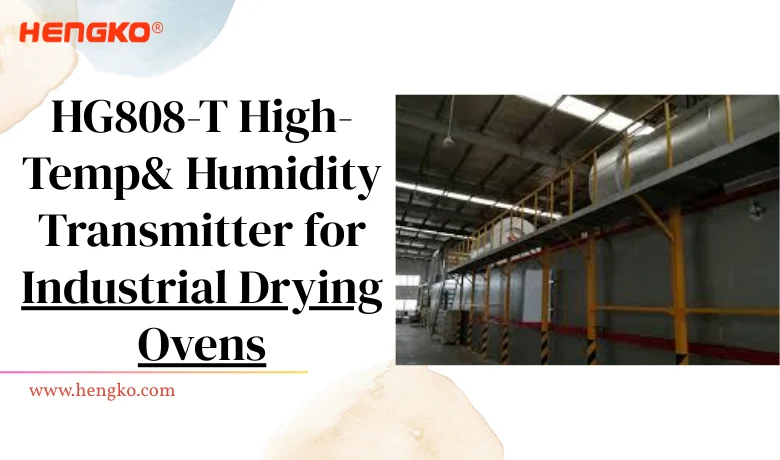
High-Temperature Humidity Transmitter for 200℃ Industrial Drying Ovens-HG808-T In many manufacturing processes, drying is more than just a step —
WhatsAppはこちら