
Sensor Kelembaban HVAC
Ensuring Optimal Comfort and Efficiency in Your HVAC System
Beranda " Sensor Kelembaban HVAC
HVAC Humidity Sensor to Solve Your HVAC Humidity Problems
Advanced Solutions for Managing HVAC Humidity with HENGKO Humidity Transmitter
HENGKO is a professional HVAC humidity sensor supplier, dedicated to solving your HVAC humidity problems. With advanced technology and a commitment to quality, HENGKO provides reliable and accurate humidity sensors that ensure optimal performance and efficiency for your HVAC systems. Our expertise and tailored solutions help maintain the perfect balance of humidity in various environments, enhancing comfort and air quality.
Keuntungan Memilih HENGKO:
- Akurasi Tinggi: Our sensors deliver precise humidity measurements, ensuring optimal system performance.
- Daya tahan: Built with robust materials, our sensors are designed to withstand harsh environments and provide long-lasting service.
- Integrasi yang mudah: HENGKO sensors are compatible with various HVAC systems, making installation and integration seamless.
- Solusi Khusus: We offer tailored sensor solutions to meet the specific needs of different HVAC applications.
- Dukungan yang sangat baik: Our dedicated customer service team provides exceptional support and assistance throughout the sensor’s lifecycle.
- Efisiensi Energi: By maintaining accurate humidity levels, our sensors help improve HVAC system efficiency, leading to energy savings.
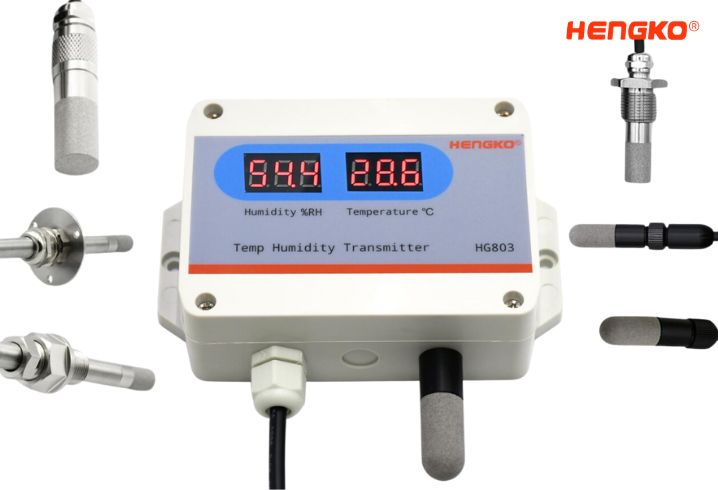
Several Probe HVAC Humidity Sensor Option - HG803
Fitur utama
*Pemancar Seri Saluran Udara HG803 dilengkapi dengan probe suhu tinggi tahan air dan anti debu halus yang sensitif, dengan kisaran suhu -40 ~ 80 ℃.
*Mengadopsi antarmuka industri standar RS485 output sinyal digital RS485 atau output analog 4-20 mA, dengan fungsi tampilan, dapat dihubungkan ke meteran tampilan digital di tempat, PLC, konverter frekuensi, host kontrol industri, dan peralatan lainnya.
Titik Embun + Modbus RS485 Kedua Keluaran
Desain yang terintegrasi, sederhana dan elegan
Perlindungan keamanan ESD kelas industri dan desain anti sambungan balik catu daya
Menggunakan probe tahan air, tahan debu, dan tahan suhu tinggi
Probe suhu tinggi tahan air dan anti debu halus yang sensitif
Protokol komunikasi RS485 Modbus RTU standar
Presisi tinggi, stabilitas tinggi, tahan air LP66, dan tingkat kedap debu
Tersedia beberapa bahan probe
Sensor Suhu Kelembaban Saluran
HENGKO menawarkan berbagai macam sensor suhu dan kelembapan untuk setiap kebutuhan, mulai dari probe sensor suhu dan kelembapan baja tahan karat hingga pemancar titik embun. Sensor kami akurat, andal, dan tahan lama, menjadikannya ideal untuk berbagai aplikasi

4.1 Titik Embun RS485 - Seri Probe Saluran Terpadu
HENGKO menawarkan berbagai macam sensor suhu dan kelembapan untuk setiap kebutuhan, mulai dari probe sensor suhu dan kelembapan baja tahan karat hingga pemancar titik embun. Sensor kami akurat, andal, dan tahan lama, menjadikannya ideal untuk berbagai aplikasi
1. Probe Flensa Saluran - 15cm
- Titik Embun RS485
2. Probe Flensa Saluran - 20cm
- Probe Panjang 20cm
- Titik Embun RS485
3. Probe Sekrup Saluran - 15cm
- Titik Embun RS485
4. Probe Sekrup Saluran - 20cm
- Probe Panjang 20cm
- Titik Embun RS485
5. Suhu Normal
- Suhu Normal
- Titik Embun RS485
4.2 RS485 & 4-20mA Output Ganda - Seri Probe Saluran Terpadu
HENGKO menawarkan berbagai macam sensor suhu dan kelembapan untuk setiap kebutuhan, mulai dari probe sensor suhu dan kelembapan baja tahan karat hingga pemancar titik embun. Sensor kami akurat, andal, dan tahan lama, menjadikannya ideal untuk berbagai aplikasi
1. Probe Flensa Saluran - 15cm
- RS485 + 4-20mA Output Ganda
2. Probe Flensa Saluran - 20cm
- Probe Panjang 20cm
- RS485 + 4-20mA Output Ganda
Duct Flange 4-20mA pemancar kelembaban Titik Embun Pemancar 20cm probe
HG803-3W4P-10
3. Probe Sekrup Saluran - 15cm
- RS485 + 4-20mA Output Ganda
4. Probe Sekrup Saluran - 20cm
- Probe Panjang 20cm
- RS485 + 4-20mA Output Ganda
5. Suhu Normal
- Suhu Normal
- RS485 + 4-20mA Output Ganda
Why It is so import to Monitor HVAC Humidity System?
Monitoring your HVAC humidity system is important for several reasons:
Kenyamanan: Proper humidity levels are essential for maintaining a comfortable indoor environment. Too much humidity can make the air feel sticky and uncomfortable, while too little can cause dryness and irritation.
Kesehatan: Maintaining the right humidity levels helps reduce the risk of respiratory problems, allergies, and the spread of airborne pathogens. Balanced humidity also prevents skin dryness and irritation.
Efisiensi Energi: Monitoring humidity levels allows the HVAC system to operate more efficiently. Proper humidity control reduces the workload on heating and cooling systems, leading to lower energy consumption and cost savings.
Protecting Property: Excess humidity can cause damage to building structures, furniture, and electronic equipment by promoting mold growth and corrosion. Insufficient humidity can cause materials like wood to dry out and crack.
Air Quality: Proper humidity levels help maintain good indoor air quality by preventing the growth of mold, mildew, and dust mites, which thrive in high humidity environments.
System Performance: Regular monitoring ensures the HVAC system operates within optimal parameters, preventing potential malfunctions and extending the system’s lifespan.
Regulatory Compliance: Many industries and commercial environments have strict humidity control requirements. Monitoring ensures compliance with these standards, avoiding potential legal and financial repercussions.

What Factor You Should Care When Choose Humidity Sensor for Your HVAC System ?
Normally We will have some advice tips for our clients to consider when choosing a humidity sensor for your HVAC system:
Akurasi: This is a major factor. How precise do you need the readings to be? For most home HVAC systems, an accuracy of +/- 2-3% relative humidity (RH) is sufficient. Higher accuracy sensors are available but may come at a higher cost.
Jangkauan: Make sure the sensor covers the typical humidity range you expect in your home. In most parts of the world, a sensor that measures from 20% to 80% RH will be appropriate.
Waktu Respon: This refers to how quickly the sensor reacts to changes in humidity. A faster response time is better for maintaining consistent comfort levels, especially if your HVAC system makes frequent adjustments.
Durability and Long-term Stability: Consider the environment where the sensor will be placed. Will it be exposed to dust, extreme temperatures, or contaminants? Choose a sensor built to withstand your specific conditions and maintain its accuracy over time.
Kalibrasi: Some sensors require regular calibration to ensure accuracy. Think about how comfortable you are with this process and choose a sensor with a calibration method that suits you.
Kompatibilitas: Ensure the sensor’s output signal (e.g., voltage, digital signal) is compatible with your HVAC system’s controller.
Size: The sensor needs to fit comfortably in the designated location within your HVAC system.
By considering these factors, you can choose a humidity sensor that provides the right balance of accuracy, reliability, and ease of use for your HVAC system.
PERTANYAAN YANG SERING DIAJUKAN
What is an HVAC humidity sensor or transmitter monitor?
An HVAC humidity sensor or transmitter monitor is a device that plays a vital role in maintaining optimal humidity levels within a building or controlled environment. It continuously measures the amount of moisture (water vapor) present in the air, which is expressed as relative humidity (RH).
There are two main types of HVAC humidity devices:
- Sensor: These devices simply measure and convert the relative humidity level into an electrical signal. This signal may be voltage, current, or resistance-based depending on the sensor type. Sensors typically require additional equipment to interpret and utilize the data.
- Transmitters: These devices combine a sensor with internal electronics that convert the sensor’s electrical signal into a standardized output format, such as a 4-20mA current loop or a digital Modbus communication protocol. Transmitters can directly connect to building automation systems (BAS) or controllers for real-time monitoring and control purposes.
Why is humidity control important in HVAC systems?
Maintaining proper humidity levels is crucial for several reasons:
- Kenyamanan: Excessive humidity can lead to a stuffy and uncomfortable feeling, while very dry air can cause irritation to the skin and respiratory system. A balanced humidity level between 30% and 50% RH is generally considered ideal for occupant comfort.
- Kesehatan: High humidity levels can promote the growth of mold and mildew, which can trigger allergies and respiratory problems. Conversely, excessively dry air can worsen respiratory issues and cause dry skin.
- Building Protection: Improper humidity control can contribute to structural damage. High humidity can lead to warping of wood, peeling of paint, and growth of mold on building materials. On the other hand, excessively dry air can cause wood to crack and furniture to become brittle.
- Efisiensi: Optimal humidity levels can improve the efficiency of HVAC systems. In cooling mode, proper dehumidification reduces the cooling load on the air conditioner. In heating mode, maintaining some moisture in the air prevents dry air from absorbing heat from occupants, reducing the heating load.
Where are HVAC humidity sensors and transmitters typically installed?
The placement of humidity sensors and transmitters depends on the specific application and the desired control strategy. Here are some common locations:
- Return air duct: This is a common location to monitor the overall humidity level within a building.
- Mixed air plenum: Here, the sensor can monitor the conditioned air being supplied to the building after mixing of return and fresh air.
- Outdoor air intake: Monitoring outdoor humidity can be helpful for controlling dehumidification strategies during cooling seasons.
- Humidified spaces: In spaces requiring specific humidity control, such as greenhouses, museums, or server rooms, sensors can be placed within the conditioned space itself.
What factors should I consider when choosing an HVAC humidity sensor or transmitter?
Several factors come into play when selecting an HVAC humidity sensor or transmitter:
- Akurasi dan Stabilitas: Look for sensors with high accuracy specifications and good long-term stability to ensure reliable readings.
- Waktu Respon: Consider the response time of the sensor, especially if it is critical to react quickly to humidity changes.
- Operating Range: Choose a sensor with an operating humidity range that covers the expected conditions within your building.
- Output Signal: Select a sensor or transmitter with an output signal that is compatible with your existing building automation system or controller.
- Daya tahan: The sensor should be suitable for the environment it will be installed in, considering factors like temperature extremes, dust, and potential presence of corrosive elements.
How do I maintain an HVAC humidity sensor or transmitter?
Most humidity sensors require minimal maintenance. However, some best practices include:
- Refer to manufacturer’s recommendations: The specific maintenance procedures may vary depending on the sensor model.
- Periodic cleaning: Following the manufacturer’s instructions, gently clean the sensor probe to remove any dust or debris buildup that could affect readings.
- Kalibrasi: Some sensors may require periodic calibration to ensure accuracy. Consult the manufacturer’s recommendations for calibration intervals and procedures.
By implementing an HVAC humidity monitoring system, you can ensure optimal comfort, protect your building structure, and potentially improve the efficiency of your HVAC system.
Produk Terkait
TEMUKAN PEMANCAR SUHU & KELEMBABAN YANG TEPAT
Beri Tahu Kami Proyek Anda Hari Ini
Beritahu Kami Detail Proyek Monitor Anda,
Kami akan memberikan solusi terbaik dengan harga yang kompetitif dalam waktu 3 hari.
Kami akan memberikan solusi terbaik dengan harga yang kompetitif dalam waktu 3 hari.

Menyebarkan Dunia
HENGKO adalah pemimpin global dalam solusi sensor industri, dengan reputasi untuk desain yang unik dan kinerja yang sangat baik. Pemancar dan sensor suhu dan kelembaban kami digunakan di berbagai industri, termasuk makanan dan minuman, farmasi, manufaktur, dan pemantauan lingkungan.
0
+
Pengalaman Bertahun-tahun
0
Penjualan di Seluruh Dunia
0
K
Proyek Industri
Proyek Populer Lainnya
Gudang Anggur
Menyempurnakan Pengawetan: Mengelola Suhu dan Kelembaban untuk Penuaan Anggur
Rumah Sakit dan Laboratorium
Presisi Perawatan Kesehatan: Memastikan Lingkungan yang Steril dan Stabil
Gudang Pertanian
Optimalisasi Penyimpanan Tanaman: Menstabilkan Kondisi Pasca Panen