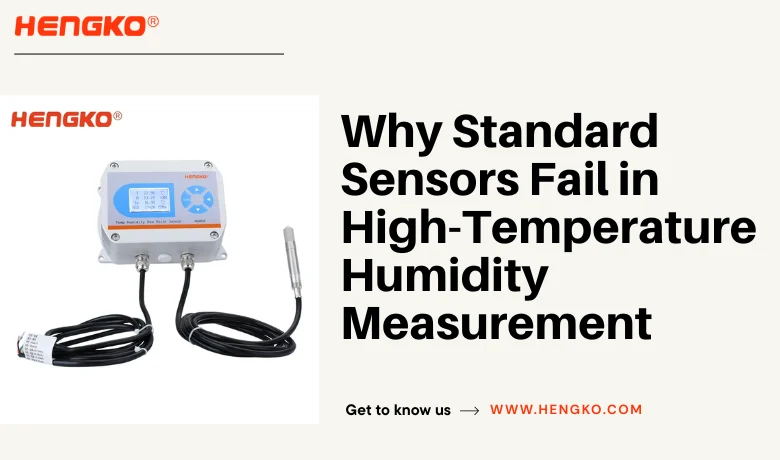
Why Standard Sensors Fail in High-Temperature Humidity Measurement
Humidity measurement is relatively straightforward at ambient conditions. Most standard sensors perform adequately in offices,

Tiny Drops, Big Impact: How Dew Point Transmitters Shape Your World
Accueil " Transmetteur de point de rosée
Découvrez les facteurs clés à prendre en compte lors de la sélection du transmetteur de température et d'humidité du point de rosée optimal pour une surveillance fiable et précise de l'environnement dans diverses applications de HENGKO.
Check Dew Point Sensor / Transmitter Selection Guide First
| Modèle | Par condition d'application | Caractéristiques principales |
| 1. Inline Dew Point Transmitter (Small HG602 Series ) | ||
Standard Precision Dew Point Measurement Dew Point Range: -60 … +60°C | - ±2 °C (±3.6℉)Td Accuracy (Dew Point) | |
| HG602-G (new) | Acidic / Corrosive Gas Environment Dew Point Monitoring Dew Point Range: -60 … +20°C | – ±3 °C (±5.4℉)Td Accuracy (Dew Point) – 316L stainless steel + anti-corrosion coating – Oil, salt spray & acid resistant (IP65 housing) – Suitable for HF, Cl₂, NH₃ and organic vapor applications |
Cold and Dry Environment Dew Point Measurement Dew Point Range: -30 … +50°C | - ±1℃ (±3.6℉) Td Accuracy (Dew Point) | |
| 2. Box Type Dew Point Transmitter ( HG808 Series ) | ||
| HG808-D | Normal Temperature Environment Dew Point Measurement Dew Point Range: -60 … +90°C | – Dew Point Accuracy: ±2℃ (±5.4℉) Td |
Chemical / Acidic / Solvent Gas Monitoring Dew Point Range: -60 … +20°C | – Dew Point Accuracy: ±3℃ (±5.4℉) Td | |
| HG808-A | Ultra High Temperature Moisture-Sensitive Applications + Dew Point Measurement Dew Point Range: -20 … +100°C | – Dew Point Accuracy: ±3℃ (±5.4℉) Td – Operates +80 °C to +180 °C (200 °C Short-lived) – 316L stainless steel sensor housing – Fast response & long-term stability under heat stress |
HG602 Series
Le capteur de point de rosée en ligne est un outil innovant conçu pour s'intégrer parfaitement dans divers systèmes industriels et commerciaux.
HG808 Series
HENGKO propose une large gamme de capteurs de température et d'humidité à point de rosée pour de nombreuses applications.
HENGKO propose une large gamme de capteurs industriels de température et d'humidité adaptés aux différents besoins de surveillance, allant de sondes en acier inoxydable à transmetteurs de point de rosée et les 6 types de dispositifs de surveillance de la température et de l'humidité suivants. Nous nous attachons à fournir des capteurs précis, fiables et durables, qui conviennent parfaitement à un large éventail d'applications.
HG970 Series
Le compteur de point de rosée portatif est un appareil compact et portable conçu pour mesurer avec précision et commodité l'humidité dans divers environnements.
HENGKO est un leader mondial dans le domaine des solutions de capteurs industriels, réputé pour son design unique et ses excellentes performances. Nos transmetteurs et capteurs de température et d'humidité sont utilisés dans une large gamme d'industries, y compris l'alimentation et les boissons, les produits pharmaceutiques, la fabrication et la surveillance de l'environnement.
Vous pouvez personnaliser entièrement un produit unique de capteur de point de rosée basé sur notre série de transmetteurs de point de rosée brevetés et conçus par nos soins.
Vous obtiendrez des prix beaucoup plus bas et compétitifs grâce à notre contrôle extrêmement rentable.
Grâce à nos produits en constante évolution, vous répondrez toujours aux besoins du marché en constante évolution.
Vous bénéficierez d'un soutien marketing solide pour vous aider à vendre vos produits avec succès. Les supports matériels comprennent : des images de produits en haute résolution, des vidéos à effet 3d, et bien plus encore.


Capteur de point de rosée pour la surveillance du système d'air comprimé : assurer un contrôle optimal de l'humidité et de la qualité de l'air pour votre machine à compression d'air
HENGKO est un fabricant leader de transmetteurs de point de rosée professionnels, de transmetteurs de température et d'humidité et de compteurs de point de rosée portatifs. Nous offrons une large gamme de solutions de surveillance de la température et de l'humidité pour répondre à vos besoins spécifiques.
Nos produits sont conçus pour être précis et fiables, afin de garantir des performances optimales dans diverses applications. Que vous ayez besoin d'un capteur de point de rosée de haute qualité ou d'un transmetteur d'humidité robuste, HENGKO possède l'expertise et les produits pour soutenir votre projet.
Contactez-nous dès aujourd'hui pour discuter de vos besoins et découvrir les meilleures solutions pour vos besoins de surveillance.
The dew point is the temperature to which the air must be cooled to become saturated with water vapor. In other words, it is the temperature at which the air can no longer hold any more water vapor in the form of gas. If the air is cooled further, the excess water vapor will condense into liquid water, forming dew.
The dew point is an important meteorological parameter because it is a measure of the amount of moisture in the air. The higher the dew point, the more moisture the air contains. This can make the air feel muggy or uncomfortable, especially on a hot day.
The dew point is also used to forecast the formation of fog and dew. If the dew point is close to the air temperature, then fog or dew is likely to form. This is because the air is close to becoming saturated, and any further cooling will cause the water vapor to condense.
Here is a table of general comfort levels using dew point:
| Dew Point (°F) | Comfort Level |
|---|---|
| Below 50 | Comfortable |
| 50-60 | Somewhat muggy |
| 60-65 | Muggy |
| 65-70 | Very muggy |
| Above 70 | Oppressive |
As you can see, dew point is a good indicator of how comfortable the air will feel. If you are planning to be outdoors, it is a good idea to check the dew point forecast before you go.
Here are some of the main features of dew point transmitters:

In addition to these main features, dew point transmitters may also offer a variety of other features, such as:
Dew point transmitters are a valuable tool for measuring and monitoring moisture content in a variety of applications. They are accurate, reliable, and versatile, and they can be used to improve the quality of products, protect equipment, and optimize industrial processes.
There are three main types of dew point transmitters: chilled mirror, polymer, and metal oxide.
Chilled mirror
Chilled mirror dew point transmitters are the most accurate type of dew point transmitter. They work by cooling a mirror until water vapor condenses on its surface. The temperature of the mirror is then measured, and this temperature is the dew point. Chilled mirror dew point transmitters are typically used in applications where high accuracy is required, such as in the pharmaceutical and semiconductor industries.
Polymer
Polymer dew point transmitters are less accurate than chilled mirror dew point transmitters, but they are also less expensive. They work by measuring the change in electrical resistance of a polymer sensor as moisture content changes. Polymer dew point transmitters are typically used in applications where cost is a major concern, such as in the HVAC industry.
Metal oxide
Metal oxide dew point transmitters are similar to polymer dew point transmitters, but they use a different type of sensor. Metal oxide dew point transmitters are typically used in applications where a wide measuring range is required, such as in the food and beverage industry.
Here is a table comparing the three main types of dew point transmitters:
| Fonctionnalité | Chilled Mirror | Polymer | Metal Oxide |
|---|---|---|---|
| Précision | Haut | Medium | Medium |
| Coût | Haut | Faible | Medium |
| Measuring Range | Wide | Narrow | Wide |
| Temps de réponse | Slow | Fast | Medium |
| Maintenance | Haut | Faible | Medium |
| Applications | Pharmaceutical, Semiconductor | CVC | Alimentation et boissons |
The best type of dew point transmitter for a particular application will depend on the specific requirements of the application. In general, chilled mirror dew point transmitters are the best choice for applications where high accuracy is required. Polymer dew point transmitters are a good choice for applications where cost is a major concern. Metal oxide dew point transmitters are a good choice for applications where a wide measuring range is required.
Dew point transmitters are important in a variety of applications, including:
HVAC systems: Dew point transmitters are used in HVAC systems to control humidity levels. Humidity is important for human comfort and health. Too much humidity can make the air feel muggy and uncomfortable, and it can also lead to the growth of mold and mildew. Too little humidity can make the air feel dry and can also lead to respiratory problems.
Contrôle des processus industriels : Dew point transmitters are used in industrial process control to ensure that products are manufactured under the correct humidity conditions. Humidity can affect the quality of many products, such as pharmaceuticals, semiconductors, and food and beverages.
Surveillance de l'environnement : Dew point transmitters are used in environmental monitoring to track changes in moisture content in the atmosphere. This information can be used to forecast weather conditions and to identify potential environmental problems.
Here are some specific examples of how dew point transmitters are used in different industries:
Pharmaceutical industry: Dew point transmitters are used to control humidity levels in clean rooms where pharmaceuticals are manufactured. Humidity levels must be carefully controlled to prevent the degradation of drugs and to ensure that they are manufactured to the highest quality standards.
Semiconductor industry: Dew point transmitters are used to control humidity levels in semiconductor fabrication plants. Humidity levels must be carefully controlled to prevent the contamination of wafers and to ensure that semiconductors are manufactured to the highest quality standards.
Food and beverage industry: Dew point transmitters are used to control humidity levels in food and beverage production facilities. Humidity levels must be carefully controlled to prevent the growth of mold and mildew, to ensure that products have the correct texture, and to extend the shelf life of products.
HVAC industry: Dew point transmitters are used in HVAC systems to control humidity levels in homes, offices, and other buildings. Humidity levels must be carefully controlled to ensure human comfort and health.
Surveillance de l'environnement : Dew point transmitters are used in environmental monitoring stations to track changes in moisture content in the atmosphere. This information can be used to forecast weather conditions and to identify potential environmental problems, such as drought or flooding.
As you can see, dew point transmitters are important in a wide variety of applications. They are essential for ensuring the quality of products, protecting equipment, and optimizing industrial processes.
In addition to the benefits listed above, dew point transmitters can also help to:
Choosing the right dew point transmitter for your compressed air system is crucial for maintaining efficient operation and ensuring the quality of your products. Here’s a comprehensive guide to selecting the most suitable dew point transmitter for your specific needs:
Determine the Required Accuracy: Consider the accuracy requirements of your application. If you need precise dew point measurements, a chilled mirror dew point transmitter is the most accurate option. However, if cost is a primary concern, a polymer or metal oxide dew point transmitter may be sufficient.
Evaluate the Measuring Range: Assess the dew point range you need to measure. Compressed air systems typically operate within a specific dew point range, so ensure the transmitter can cover that range effectively.
Consider Response Time and Maintenance: Response time is essential for detecting changes in dew point quickly. If real-time monitoring is critical, choose a transmitter with a fast response time. Maintenance requirements also vary between types. Chilled mirror transmitters require more maintenance, while polymer and metal oxide transmitters are generally low-maintenance.
Select the Appropriate Output Options: Decide on the output options you need for integration with your system. Common output options include analog (4-20 mA or 0-10 V), digital (RS-485 or Modbus), and alarm relays.
Environmental Considerations: Evaluate the environmental conditions where the transmitter will be installed. Choose a transmitter that can withstand the expected temperature, humidity, and vibration levels.
Additional Features: Consider additional features that may be beneficial, such as data logging, alarm setpoints, and remote access capabilities. These features can enhance monitoring and control capabilities.
Consult with Experts: If you have complex requirements or need assistance in selecting the most suitable dew point transmitter, consult with experienced professionals in the field. They can provide tailored recommendations based on your specific application and needs.
Here’s a summary table to aid in your selection:
| Fonctionnalité | Chilled Mirror | Polymer | Metal Oxide |
|---|---|---|---|
| Précision | Haut | Medium | Medium |
| Coût | Haut | Faible | Medium |
| Measuring Range | Wide | Narrow | Wide |
| Temps de réponse | Slow | Fast | Medium |
| Maintenance | Haut | Faible | Medium |
| Applications | Pharmaceutical, Semiconductor | CVC | Alimentation et boissons |
| Output Options | Analog, Digital, Alarm Relays | Analog, Digital | Analog, Digital |
| Additional Features | Data Logging, Alarm Setpoints, Remote Access | Limitée | Limitée |
The 4-20mA output is a popular choice for dew point sensors because it is a standard industrial output that is compatible with a wide range of control systems. It is also a very reliable and noise-resistant output, which makes it well-suited for use in harsh industrial environments.
Here are some of the advantages of using a 4-20mA output for dew point sensors:
Compatibilité : The 4-20mA output is compatible with a wide range of control systems, including PLCs, DCSs, and SCADA systems. This makes it easy to integrate dew point sensors into existing control systems.
Fiabilité : The 4-20mA output is a very reliable output that is not susceptible to noise interference. This is important for dew point sensors, which are often used in harsh industrial environments.
Précision : The 4-20mA output can provide accurate measurements of dew point. This is important for applications where precise dew point control is required.
Gamme : The 4-20mA output can cover a wide range of dew point values. This makes it suitable for a variety of applications.
Coût : The 4-20mA output is a relatively inexpensive output to implement. This makes it a cost-effective option for dew point sensors.
In addition to the advantages listed above, the 4-20mA output is also a very versatile output. It can be used to transmit a variety of other parameters, such as temperature, pressure, and flow rate. This makes it a valuable output for a wide range of industrial applications.
Here are some examples of applications where dew point sensors with 4-20mA outputs are commonly used:
Compressed air systems: Dew point sensors are used in compressed air systems to monitor and control the moisture content of the air. This is important for preventing corrosion and other damage to equipment.
HVAC systems: Dew point sensors are used in HVAC systems to control the humidity levels in buildings. This is important for human comfort and health.
Industrial drying processes: Dew point sensors are used in industrial drying processes to monitor and control the moisture content of the product being dried. This is important for ensuring the quality of the product.
Food and beverage processing: Dew point sensors are used in food and beverage processing to control the moisture content of the product being processed. This is important for ensuring the safety and quality of the product.
Surveillance de l'environnement : Dew point sensors are used in environmental monitoring stations to track changes in moisture content in the atmosphere. This information can be used to forecast weather conditions and to identify potential environmental problems.
As you can see, dew point sensors with 4-20mA outputs are a valuable tool for a wide range of industrial applications. They are reliable, accurate, and versatile, and they can be easily integrated into existing control systems.
The price of dew point transmitters can vary depending on the manufacturer, the features, and the accuracy of the transmitter. In general, dew point transmitters with higher accuracy and more features will cost more than dew point transmitters with lower accuracy and fewer features.
Based on my research, I would say that the price of dew point transmitters is generally fair. The cost of the components and the labor required to manufacture dew point transmitters is high, and the companies that manufacture dew point transmitters need to recoup these costs in order to stay in business. Additionally, dew point transmitters are used in a variety of critical applications, so it is important that they are reliable and accurate. The high price of dew point transmitters reflects the fact that they are high-quality instruments that can be trusted to provide accurate measurements.
Here are some factors that can affect the price of a dew point transmitter:
Here is a table of the price range of dew point transmitters on the market:
| Type | Price Range |
|---|---|
| Chilled mirror | $2,000 – $10,000 |
| Polymer | $500 – $2,000 |
| Metal oxide | $500 – $1,500 |
As you can see, the price range of dew point transmitters can vary depending on the type of transmitter. Chilled mirror dew point transmitters are the most expensive type of transmitter, but they are also the most accurate. Polymer and metal oxide dew point transmitters are less expensive, but they are also less accurate.
The price of dew point transmitters can also vary depending on the features of the transmitter. For example, dew point transmitters with data logging, alarm setpoints, and remote access capabilities will typically cost more than dew point transmitters with fewer features.
If you are looking for a high-quality dew point transmitter, I would recommend purchasing one from a well-known brand that has a good reputation for quality and reliability. You should also consider the features that are important to you and the accuracy that you require. If you are not sure which dew point transmitter is right for you, I would recommend consulting with a professional who can help you make an informed decision.
Quelques questions sur le point de rosée, le transmetteur et le capteur que vous et les gens aiment savoir
A high dew point means that the air can hold a lot of moisture before it becomes saturated and condensation occurs. In general, a dew point above 60°F (15°C) is considered high. High dew points can make the air feel humid and uncomfortable, especially on a hot day.
Actually there are two main types of dew point transmitters, each one with a different working principle, please check as following:
1. Chilled Mirror Dew Point Transmitters:
2. Polymer/Ceramic Sensor Dew Point Transmitters:
Which type is better?
The choice between a chilled mirror and a polymer/ceramic sensor transmitter depends on your specific needs:
I hope this explanation helps!
Feel free to ask or contact our Team by email if you have any further questions about dew point transmitters.
Dew point and humidity are two different measures of the amount of moisture in the air.
1.Dew point is the temperature to which the air must be cooled to become saturated with water vapor. In other words, it is the temperature at which the air can no longer hold any more water vapor in the form of gas. If the air is cooled further, the excess water vapor will condense into liquid water, forming dew.
2.Humidity, on the other hand, is the amount of water vapor in the air, expressed as a percentage of the maximum amount of water vapor that the air can hold. Relative humidity is the most common measure of humidity, and it is calculated by dividing the actual amount of water vapor in the air by the maximum amount of water vapor that the air can hold at that temperature.
There are a few different ways to calculate dew point temperature. The most common method is to use a hygrometer, which is a device that measures both temperature and humidity. The dew point temperature can then be calculated from the temperature and humidity readings using a special formula.
Another way to calculate dew point temperature is to use a psychrometer, which is a device that consists of two thermometers, one with a wet bulb and one with a dry bulb. The dew point temperature can then be calculated from the difference between the wet bulb and dry bulb temperatures using a special table or formula.
No, dew point and humidity are not the same thing. Dew point is a measure of the amount of moisture in the air, while humidity is a measure of the ratio of the amount of water vapor in the air to the maximum amount of water vapor that the air can hold.
Two different air masses can have the same dew point but different humidity levels. For example, a warm air mass with a high dew point can have the same humidity level as a cool air mass with a low dew point. This is because the warm air mass can hold more water vapor than the cool air mass.
There is no cod point in Mountain Dew. Cod points are a unit of measurement used to quantify the amount of cod liver oil in a product. Mountain Dew does not contain cod liver oil.
The comfortable dew point range for most people is between 40°F (4°C) and 60°F (15°C). Below 40°F, the air can feel dry and uncomfortable. Above 60°F, the air can feel humid and uncomfortable.
A dew point above 60°F (15°C) is considered humid. Humid air feels sticky and uncomfortable, especially on a hot day.
A dew point above 65°F (18°C) is considered muggy. Muggy air feels even more sticky and uncomfortable than humid air.
Dew point meters, also known as dew point transmitters or sensors, have a variety of purposes in different fields. Here are some of the most common ones:
1. Monitoring atmospheric conditions:
2. Controlling humidity levels:
3. Protecting equipment and materials:
4. Research and scientific applications:
Overall, dew point meters are incredibly versatile tools used across various fields to understand and manage humidity levels, ensuring safety, efficiency, and quality in diverse applications.
Testing the humidity in an air cylinder is crucial to ensure the quality and performance of the compressed air it contains. Excessive moisture can lead to corrosion, reduced flow, and malfunctioning of equipment using the air. Here are two common methods for testing humidity in an air cylinder:
1. Chilled Mirror Hygrometer:
2. Hygroscopic Sensor:
Conseils supplémentaires :
So Above these methods and tips, you can effectively test the humidity in your air cylinder and ensure the optimal performance of your equipment.
Controlling the dew point in compressed air is crucial for ensuring the quality and performance of your pneumatic equipment. Excessive moisture can lead to corrosion, reduced flow, malfunctioning of equipment, and even contamination of sensitive products. Here are some key methods for controlling dew point in compressed air:
1. Air Dryers:
Air dryers are the most common and effective method for removing moisture from compressed air. They work by lowering the dew point, the temperature at which water vapor condenses. There are two main types of air dryers:
Refrigerant dryers: These dryers use a refrigeration system to cool the compressed air, causing water vapor to condense and drain out. They are suitable for achieving dew points down to around 40°F (4°C).
Desiccant dryers: These dryers use a desiccant material, such as silica gel or alumina, to absorb moisture from the compressed air. They can achieve much lower dew points, down to -40°F (-40°C) or even lower, making them ideal for critical applications
2. Aftercoolers:
3. Drain Traps:
4. System Design and Maintenance:
Conseils supplémentaires :
By implementing these methods and tips, you can effectively control the dew point in your compressed air system and ensure the optimal performance and longevity of your equipment.
Dew point transmitters and sensors play a crucial role in regulating moisture levels across various industries. Here are the top 10 applications where these instruments shine:
Ensuring dry and clean compressed air is vital for efficient operation and preventing corrosion in pneumatic equipment. Dew point transmitters monitor dryness levels, optimizing dryer performance and avoiding costly issues.
Precise dew point control is critical for product quality and consistency in chemical and pharmaceutical manufacturing. Precisely measuring and managing moisture prevents reactions, ensures accurate formulations, and safeguards product stability.
Dew point control is crucial for food product quality and shelf life. Monitoring and maintaining optimal moisture levels in storage and processing environments prevents condensation, mold growth, and product spoilage.
Dew point sensors help maintain comfortable humidity levels in buildings and optimize cooling systems. Accurate dew point data allows for proper air conditioning control, maximizing energy efficiency and preventing condensation issues.
Dew point measurements are integral for weather forecasting, climate studies, and agricultural applications. Monitoring dew point variations helps predict frost, dew formation, and other environmental phenomena.
Dew point control is crucial for aircraft safety and performance. Dry air prevents ice formation on critical components, ensuring airworthiness and safe operation.
Maintaining precise dew point levels in medical facilities and biotech labs is essential for sterility and preventing the growth of harmful microorganisms.
Controlling moisture in power plants is crucial for efficient energy production and preventing corrosion in turbines and other equipment. Dew point measurement ensures optimal plant operation and minimizes maintenance costs.
Monitoring dew point during construction helps prevent condensation problems, mold growth, and structural damage. Dew point data informs proper ventilation and drying strategies, ensuring durable and healthy buildings.
Dew point sensors help optimize paint curing processes in car manufacturing and prevent condensation within sealed vehicle components. This ensures high-quality finishes and protects against corrosion.
Above are just a few examples, and transmetteurs de point de rosée and sensors have numerous applications beyond these ten.
Their versatility and precision in measuring moisture make them invaluable tools across various industries.
Do you have any specific application in mind where you’d like to know more about dew point transmitters and sensors?
Contactez HENGKO dès aujourd'hui pour toute question concernant les capteurs de température et d'humidité, les transmetteurs et les solutions.

Humidity measurement is relatively straightforward at ambient conditions. Most standard sensors perform adequately in offices,

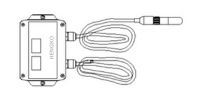
Industrial drying processes—used in pharmaceuticals, food, chemicals, and materials—demand precise control of temperature and humidity.

High-Temperature Humidity Transmitter for 200℃ Industrial Drying Ovens-HG808-T In many manufacturing processes, drying is more

Effective moisture management is essential in facilities where materials, equipment, and processes depend on controlled

En bref, les transmetteurs d'humidité et de température mesurent et envoient des données environnementales aux systèmes de contrôle. Ils sont
Contactez notre équipe d'experts pour une assistance personnalisée et nous vous fournirons rapidement les meilleures solutions de transmetteurs et de capteurs de température et d'humidité adaptées à vos besoins spécifiques.

Humidity measurement is relatively straightforward at ambient conditions. Most standard sensors perform adequately in offices, warehouses, and general HVAC environments. However, once temperatures rise above

Humidity measurement is relatively straightforward at ambient conditions. Most standard

Industrial drying processes—used in pharmaceuticals, food, chemicals, and materials—demand precise
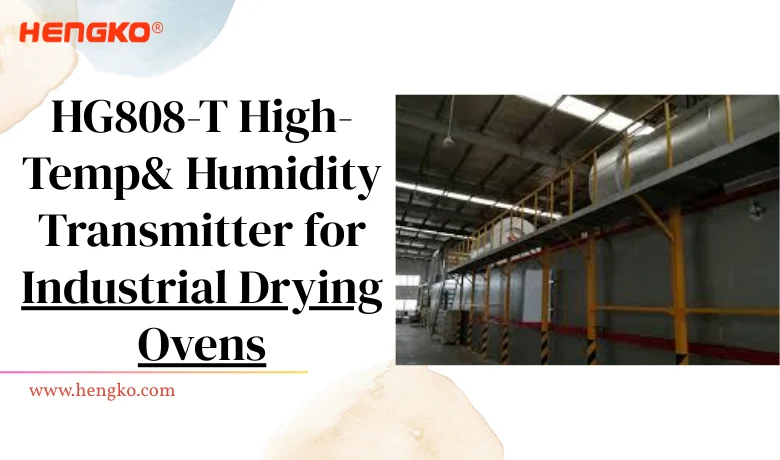
High-Temperature Humidity Transmitter for 200℃ Industrial Drying Ovens-HG808-T In many
Nous contacter par WhatsApp