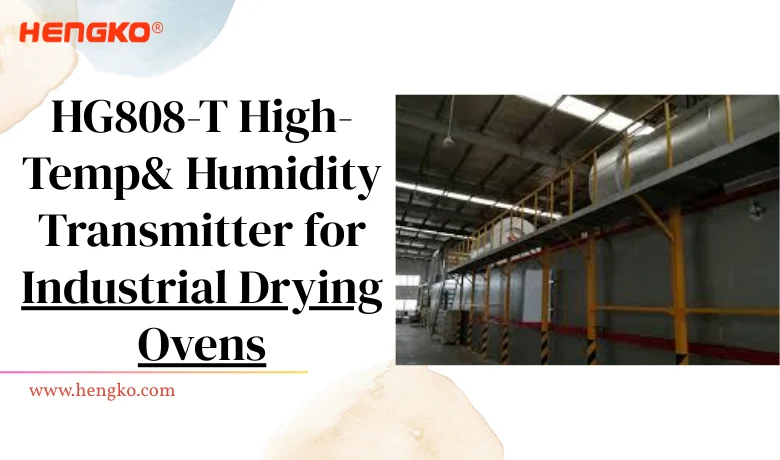
High-Temperature Humidity Transmitter for 200℃ Industrial Drying Ovens-HG808-T
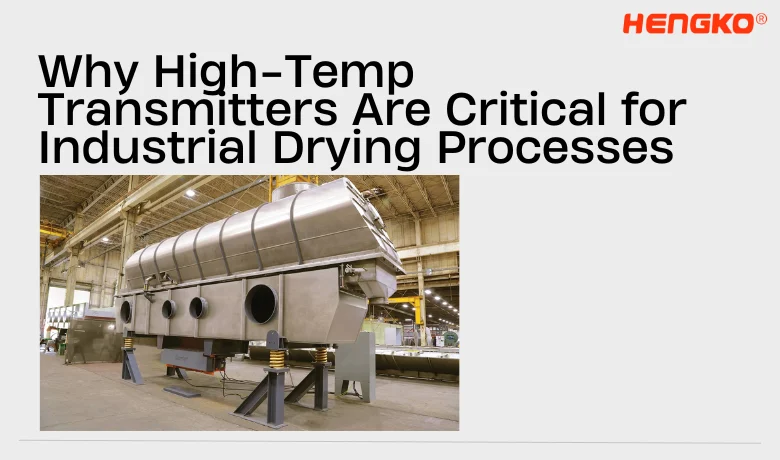
In many manufacturing processes, drying is more than just a step — it’s a decisive factor that directly affects product quality, production efficiency, and energy consumption. Whether you’re drying ceramics, powder materials, food ingredients, coatings, lithium battery materials, or industrial components, temperature and moisture inside the drying oven define how well the final product performs.
Yet here’s the challenge:
Most humidity sensors simply cannot survive inside a real industrial drying oven. Temperatures rise above 120–150°C, hot air circulates rapidly, and humidity fluctuates sharply during the drying cycle. Under such conditions, traditional sensors fail quickly — drifting, burning out, or delivering unreliable readings.
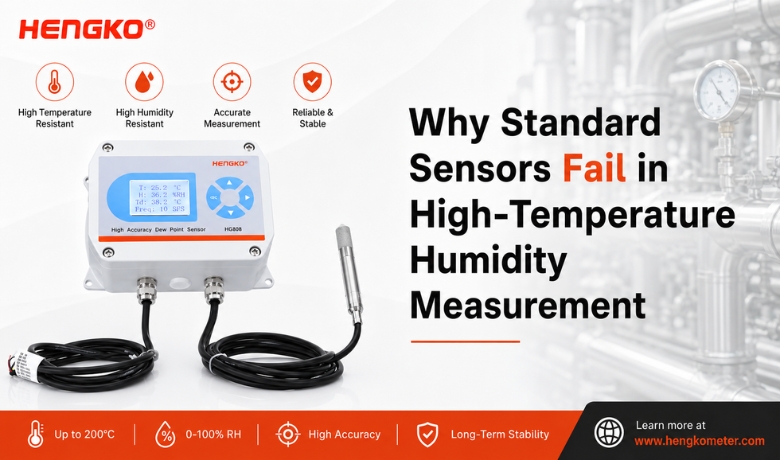
This is exactly why we created the HG808-T High-Temperature Temperature & Humidity Transmitter — a transmitter built to bring accurate, stable, and continuous humidity monitoring into environments where other sensors give up.
Why Temperature & Humidity Monitoring Matters in Industrial Drying
If you work with drying ovens, you already know this:
Drying is not only about heating — it’s about controlling moisture removal.
Here’s what goes wrong when humidity isn’t measured:
- Incomplete drying leads to cracking, deformation, or internal moisture residue
- Over-drying wastes energy and may damage delicate materials
- Irregular drying causes inconsistency batch to batch
- Manual control introduces variability and increases labor dependency
- A modern drying process should be data-driven, not “experience-driven.”
But to achieve this, you need a humidity sensor that actually survives your oven.
HG808-T — Built for Heat, Built for Stability
The HG808-T is specifically engineered for continuous monitoring in high-temperature drying conditions.
Its stainless-steel industrial probe, high-temperature resistant sensing module, and robust sealed structure allow it to work reliably where traditional sensors fail.
Key Advantages for Drying Oven Applications
✔ Long-term operation at high temperature
Supports continuous operation in 85–180°C environments — ideal for drying ovens, hot-air tunnels, and batch dryers.
✔ Accurate humidity measurement during the drying curve
The sensor maintains stable performance even during rapid moisture release at the beginning of the drying cycle.
✔ 316L stainless steel probe
Resistant to heat, oxidation, and light contamination — perfect for hot, moving air in the drying chamber.
✔ Plug-and-play industrial integration
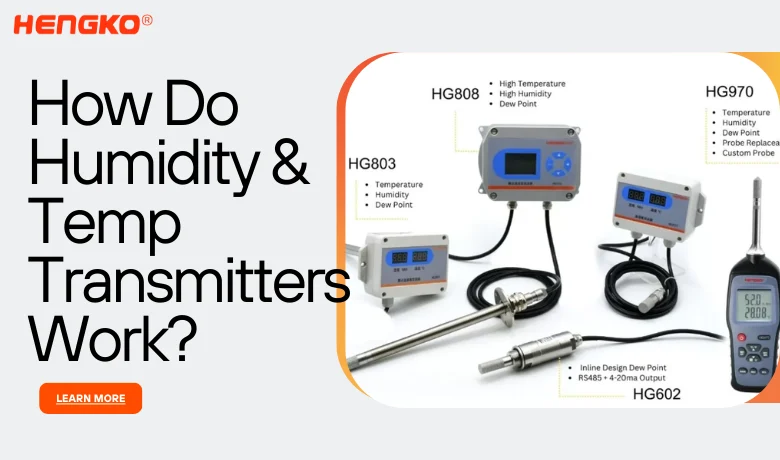
RS485 Modbus-RTU + analog outputs (4–20 mA, 0–5V, 0–10V) make it easy to connect with:
PLC
DCS
Oven controllers
SCADA systems
✔ Reliable, repeatable data
Industrial-grade design reduces drift, extends lifetime, and ensures data remains stable even after long-term exposure to high heat.
How HG808-T Improves Industrial Drying Processes
-
Optimizes drying curves
- Different materials require different moisture-removal profiles.
- Real-time humidity feedback lets you:
- Start with a gentle drying phase
- Prevent case hardening
- Control moisture gradient
- Achieve consistent drying throughout the batch
Instead of relying on trial and error, operators can follow data-based drying curves.
-
Improves product quality and consistency
Humidity affects:- shrinkage rate
- cracks
- surface finish
- porosity
- residual moisture
With accurate humidity data, your drying oven simply performs better.
-
Reduces energy consumption
Over-drying wastes heat.
Under-drying leads to rework.
Real-time humidity monitoring allows:
shorter cycle times
reduced heater usage
smarter airflow control
This means overall lower production cost. -
Enables automation and unmanned operation
Once humidity data enters your control system, you unlock:- automatic exhaust control
- fan speed adjustment
- temperature compensation
- moisture-based drying completion detection
This is the difference between a basic oven and an intelligent drying system.
Typical Industries That Benefit from HG808-T
✔ Ceramics & Brick Drying
Prevents cracks and warping by balancing moisture loss.
✔ Powder and Chemical Material Drying
Ensures stable water content and prevents agglomeration.
✔ Lithium Battery Electrode Materials
Strict moisture control improves electrochemical performance.
✔ Food Ingredients & Spices
Maintains flavor, color, and shelf stability.
✔ Coating Curing & Component Drying
Supports uniform curing and prevents defects.
Any industry using a drying oven between 90–200°C can significantly benefit.
Case Example: Drying Oven Upgrade
A materials manufacturer struggled with inconsistent drying results using a 150°C industrial oven. Humidity varied widely during early drying, but their existing sensor failed after a few days.
After installing the HG808-T:
- Humidity data became stable for the entire drying cycle
- Operators adjusted airflow based on real-time moisture release
- Drying time decreased by 12%
- Defect rates dropped significantly
- Sensor lifetime extended to months rather than days
A small change in instrumentation created a major improvement in performance.
Wnioski
Industrial drying is becoming smarter, more automated, and more quality-driven.
But none of that is possible without a reliable humidity transmitter that survives the heat.
The HG808-T is built for this environment — high temperature, tough airflow, and demanding production lines.
It helps you:
- Improve quality
- Reduce energy waste
- Stabilize production
- Upgrade to intelligent drying
For manufacturers using high-temperature drying ovens, HG808-T isn’t just a sensor — it’s the key to taking your process control to the next level.