
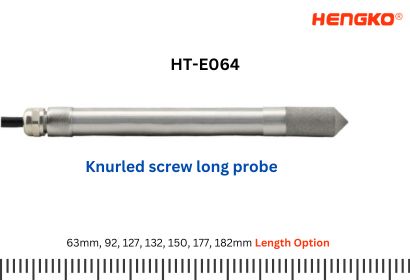
Sonda lunga a vite zigrinata Sensore integrato I2C di temperatura e umidità

HENGKO Il sensore di temperatura e umidità HT-E064 è una sonda intercambiabile front-end con un piccolo alloggiamento universale in acciaio inox sinterizzato e un connettore M12 che può essere cambiato in pochi secondi senza dover regolare la calibrazione della valutazione elettronica. Questa sonda intercambiabile front-end consente l'uso in vari ambienti difficili.

Articolo: HT-E064

Caratteristiche del prodotto

* Uscita del prodotto: I2C

* Alimentazione: DC 3.3V~5.5VPower 

* Consumo: <0.1W

   Umidità Campo di misura: -40~125 ℃, 0~99,9%RH

    Temperatura Intervallo di lavoro: -20 ~ 70℃ , 

      Tempo di risposta: 8s (velocità di 1m/s)

* RHT-H35 Precisione:
(selezionabile in base alla scheda tecnica)

  1. Temperatura +0,1°C (@25C)
  2. Umidità ±1,5%RH (@10%RH~90%RH, @25℃)
 

* Stabilità a lungo termine:

Umidità: <1%RH/Y

Temperatura: <0,1°C/Y

* Opzione lunghezza: 

63 mm, 92, 127, 132, 150, 177, 182 mm Opzione lunghezza

SPECIFICA

Parametri del prodotto:

★ Uscita digitale I2C; dimensioni molto ridotte
★ Rapida intercambiabilità sul campo per ridurre al minimo il numero di clienti.
costi di manutenzione
★ Misurazione rapida e affidabile della temperatura dell'aria e della temperatura del suolo.
umidità
★ Accuratezza massima fino a ±0,1°C
★ Livello IP66 impermeabile e antipolvere, robusto e resistente
alla pressione
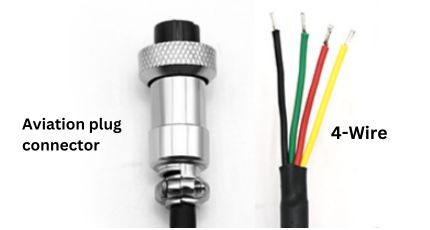
★ Connettore standard a 4 celle, alta capacità di gestione

La serie di sonde di temperatura e umidità con uscita I²C di HENGKO è utilizzata in particolare per la misurazione della temperatura e dell'umidità in ambienti industriali difficili. 

Adotta un'unità di misura avanzata della temperatura e dell'umidità con una piccola deriva e un'elevata precisione. 

Il design del circuito anti-interferenza è in grado di resistere a diverse forti interferenze elettromagnetiche, come i convertitori di frequenza in loco;

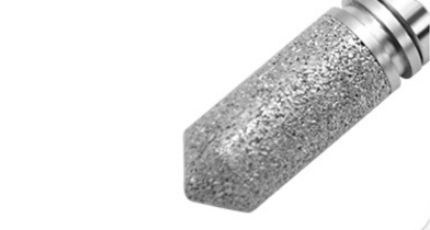
Il materiale in acciaio inox 316L ad alta resistenza non solo garantisce l'ingresso di molecole di gas, ma impedisce anche l'ingresso di particelle di polvere e gocce d'acqua. 

Può essere utilizzato in situazioni di umidità e polvere elevata ed è resistente.

Garantire un'elevata accuratezza, stabilità e affidabilità delle misure, della misurazione della temperatura e dell'umidità o del controllo di processo negli impianti industriali (misurazione della temperatura e dell'umidità di camere di prova ambientali, celle di fermentazione, incubatori, celle climatizzate, armadi frigoriferi, camere bianche, magazzini, musei, musei d'arte, archivi)

Caratteristiche:
1. Interfaccia di comunicazione I²C, protocollo ModBus-RTU standard
2. ±0,1℃; ±1,5%RH, alta precisione, bassa deriva
3. L'alimentazione centralizzata a lunga distanza può ancora funzionare normalmente.

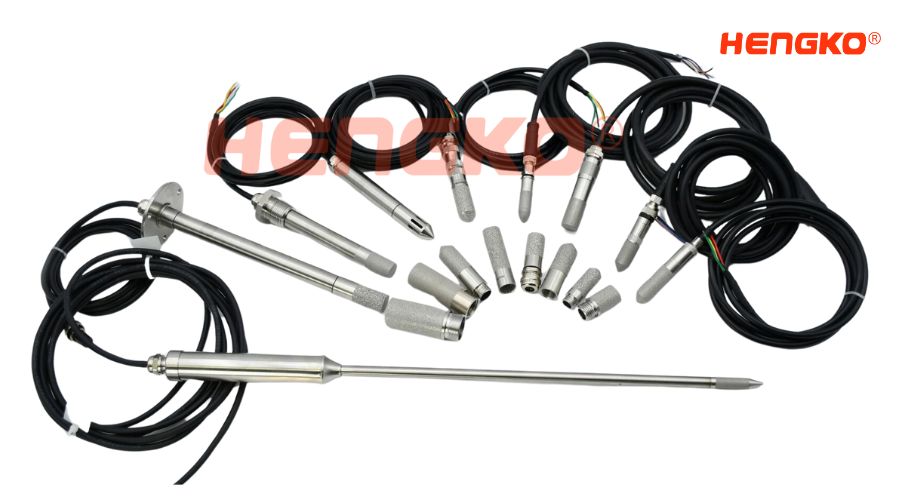
Opzione sonda trasmettitore di temperatura e umidità I2C
metallo in acciaio inox per sonda di umidità

Materiali in acciaio inox

* 1. Impermeabile e antipolvere
* 2. Resistente alle alte temperature e alla corrosione

Sono disponibili diversi tipi di sonde

* 1. Alto grado di corrispondenza
* 2. Soddisfare le diverse esigenze di misurazione

Sonda di umidità metallica impermeabile IP66

Sonda di umidità metallica impermeabile IP66

* 1. Forte e resistente all'usura
* 2. Forte capacità di resistere alle sollecitazioni

Due tipi di fili da collegare

* 1. Alto grado di corrispondenza
* 2. Soddisfare le diverse esigenze di misurazione

due tipi di fili da collegare

Blog

Why Standard Sensors Fail in High-Temperature Humidity Measurement ?

Why Standard Humidity Sensors Fail in High-Temperature Environments Quick Summary Standard humidity sensors are mainly designed for ambient or moderate industrial conditions. Under sustained high temperatures, steam, contaminants, and repeated thermal cycling, they can suffer from material degradation, measurement drift, condensation damage, and shortened service life. This article explains the most common failure mechanisms and

Continua a leggere "

Why High-Temperature and Humidity Transmitters Are Critical for Industrial Drying Processes

How to Monitor Temperature and Humidity in High-Temperature Industrial Drying Processes Quick Summary Industrial drying processes used in pharmaceuticals, food production, chemicals, ceramics, and materials manufacturing require precise control of temperature and humidity. Even small deviations can cause product defects, excessive energy consumption, longer drying cycles, or equipment damage. This guide explains why high-temperature drying

Continua a leggere "

200℃ High-Temperature Humidity Transmitter for Industrial Drying Ovens HG808-T

High-Temperature Humidity Transmitter for 200℃ Industrial Drying Ovens-HG808-T In many manufacturing processes, drying is more than just a step — it’s a decisive factor that directly affects product quality, production efficiency, and energy consumption. Whether you’re drying ceramics, powder materials, food ingredients, coatings, lithium battery materials, or industrial components, temperature and moisture inside the drying

Continua a leggere "

Ottimizzazione dei deumidificatori con il monitoraggio avanzato di temperatura e umidità

Effective moisture management is essential in facilities where materials, equipment, and processes depend on controlled environmental conditions. While dehumidifiers play a central role, their performance—and efficiency—largely depends on accurate temperature and humidity monitoring. With advanced transmitters providing continuous, real-time environmental data, dehumidifiers can operate intelligently rather than blindly, ensuring consistent protection and optimal operating costs.

Continua a leggere "

Come funzionano i trasmettitori di umidità e temperatura?

In short, Humidity and temperature transmitters measure and send environmental data to control systems. They are widely used in HVAC, pharmaceuticals, food processing, and cleanrooms where precise conditions are critical. Sensing: Built-in humidity and temperature sensors detect moisture and heat changes. Signal Conversion: The device converts raw signals into standard outputs like 4–20 mA or

Continua a leggere "

Perché monitorare temperatura e umidità negli essiccatori ad aria refrigerata?

Introduction Compressed air is often referred to as the “fourth utility” in modern industry, alongside electricity, water, and gas. Yet, one of the most common issues facing compressed air systems is moisture. When untreated, moisture can lead to corrosion, blocked pipelines, damaged pneumatic equipment, and compromised product quality. To address this, refrigerated air dryers—commonly known

Continua a leggere "

Salvaguardia della produzione di semiconduttori con dispositivi di monitoraggio della temperatura e dell'umidità di precisione

1. Introduction The semiconductor industry operates under some of the most stringent environmental conditions of any manufacturing sector. As devices shrink to the nanoscale and production processes grow increasingly complex, maintaining precise control over environmental parameters—particularly temperature and humidity—has become critical to ensuring consistent quality and yield. Even slight fluctuations in temperature or humidity can

Continua a leggere "

In che modo i trasmettitori di temperatura e umidità garantiscono la precisione nelle camere di lavoro

Introduction In the world of environmental simulation and reliability testing, constant temperature and humidity chambers are indispensable tools across a wide range of industries—from electronics and pharmaceuticals to materials science and aerospace. These chambers are engineered to maintain a precisely controlled climate, ensuring stable temperature and relative humidity (RH) for extended testing cycles. But what

Continua a leggere "

Prodotti che potrebbero piacerti

Si tratta di una galleria per mostrare le immagini dei vostri post recenti sui social.

Dettagli e prezzi