
High temperature and humidity Split Probe portable dew point temperature meter

The HENGKO HG-982 Handheld Dewpoint Meter is a versatile tool designed for spot-checking applications and field calibration in various industrial settings. It provides accurate and fast measurements of dew point, temperature, relative humidity, and wet bulb temperature.

Item: HG982

Product parameters

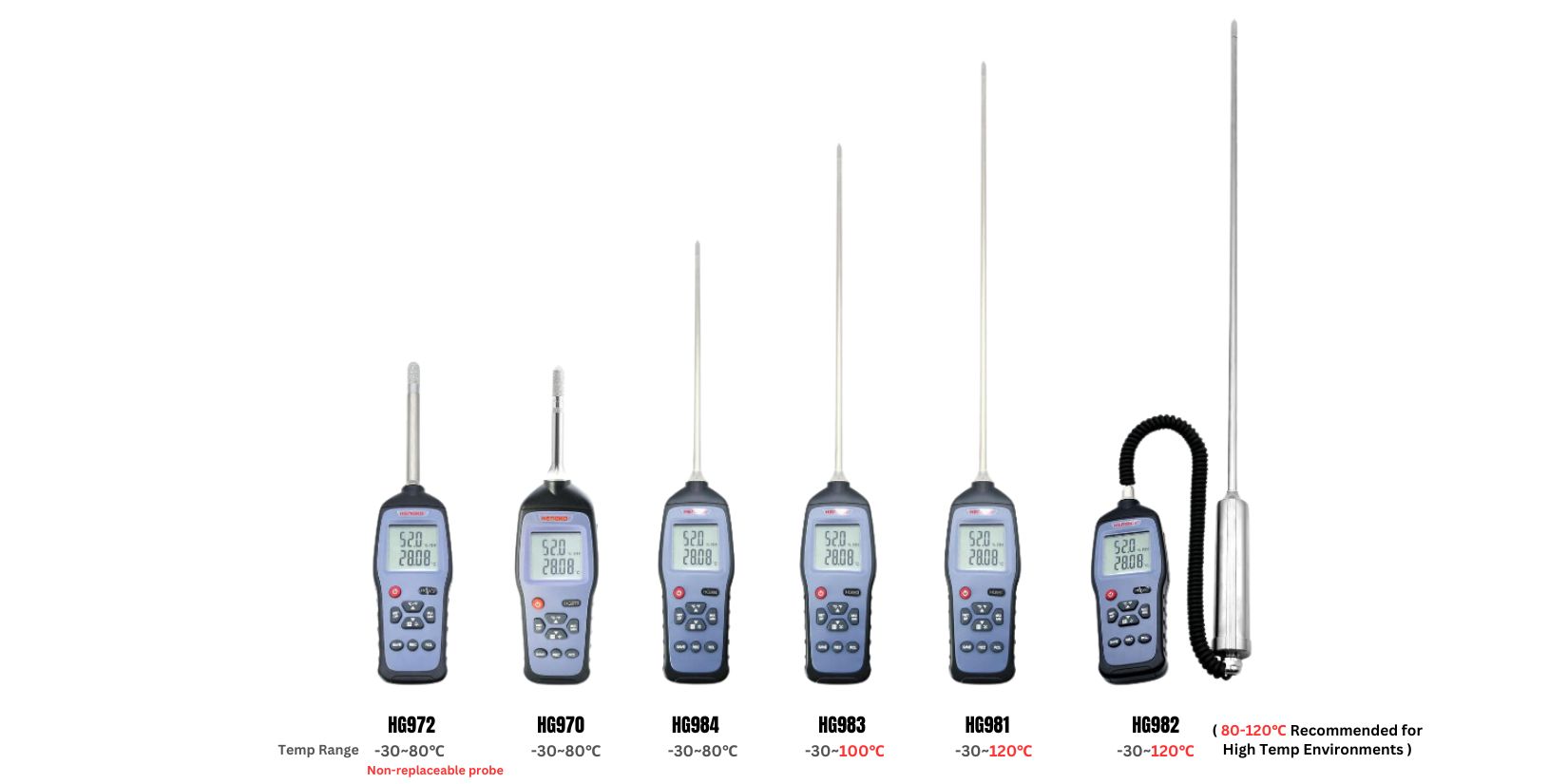
  • Temperature range: -30℃~+120℃ max, for the probe
  • Humidity range: 0%RH-99.9%RH
  • Dew Point range: -50 ~ 80 °C (-58 ~ 176 °F)
  • External probe accuracy: ±1.5%RH, ±0.4℃(25℃)
  • Web range: -20~60℃, ±0.5℃(25℃)
  • Multiple units of measure: °C, °F, ppm, g/m³, g/kg
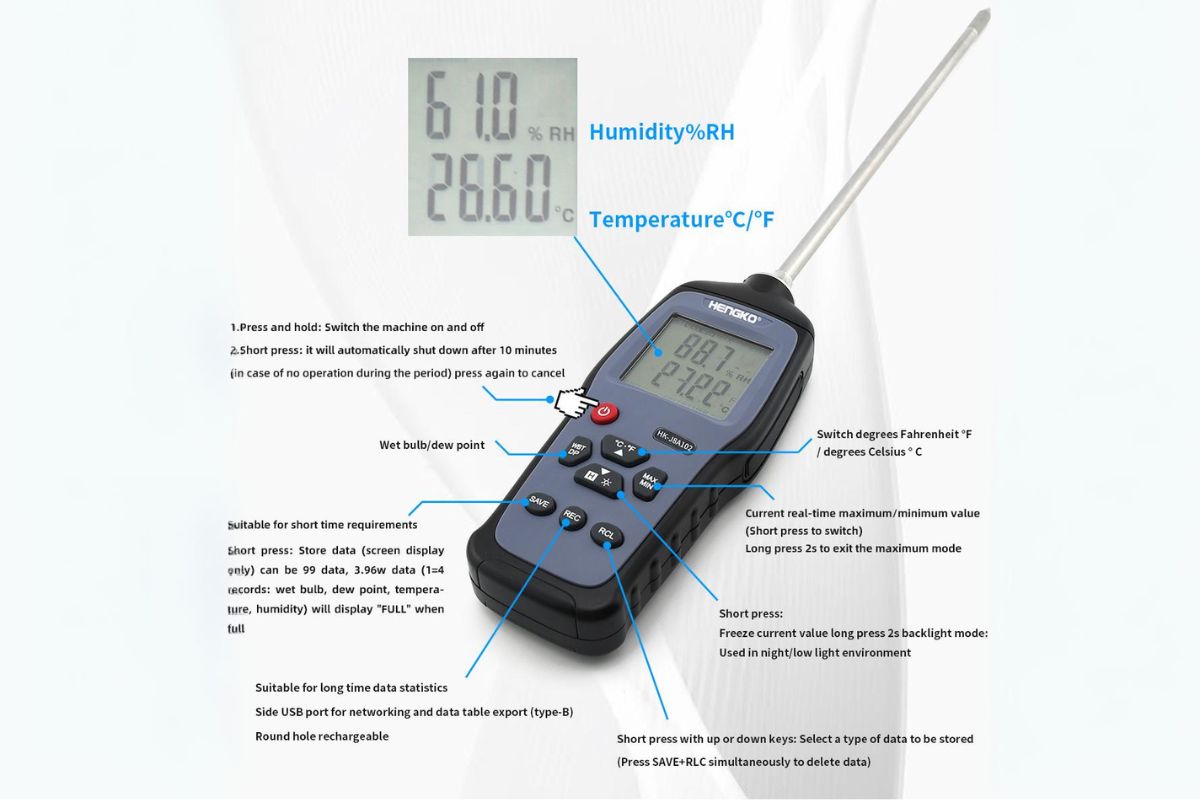
  • Large backlit LCD display: Easy to read in any light condition
  • Data logging and export: Allows you to store and analyze your data
  • Data Storage: 32000-64000
  • Data Output: USB connector, 99-Data can use directly 
  • Compact and portable design: Easy to use on-site and in the field
  • Rugged and durable construction: Built to withstand harsh industrial environments

SPECIFICATION

Product Highlights:

Quick response, the product uses 316L stainless steel probe
Shell, more durable;
With IP66 waterproof and dustproof rating, it can survive harsh conditions
Provides long-term accuracy under environmental conditions;
Simple interface, easy to use, easy to operate, no need for professional
professional personnel training;
It also adopts a high-definition large screen with backlight, allowing the product to stand out even under the scorching sun.
Data can be viewed normally even in dark night environments;
Connect to Bluetooth, monitor data in real time, and automatically generate data
Data table can store 99 sets of data.

handheld temperature and humidity meter instruction
Portable Temp Humidity Meter Item Option by HENGKO

FAQ

A split probe portable dew point temperature meter is a precision instrument designed to measure dew point, temperature, and humidity in environments characterized by high temperature and humidity levels. The device consists of two main components: a sensor probe and a display unit. The sensor probe, equipped with specialized sensors, is placed in the measurement environment while the display unit provides readings and controls.

The dew point is determined by cooling a mirror surface until condensation forms, at which point the temperature of the mirror is recorded as the dew point. The meter calculates relative humidity, absolute humidity, and other parameters based on the dew point and temperature measurements. These instruments often employ advanced algorithms and compensation techniques to ensure accurate readings in challenging conditions.

High temperature and humidity split probe dew point meters find applications in various industries where precise moisture control is critical. Some common applications include:

  • Industrial processes: Monitoring and controlling humidity in manufacturing processes, drying, and curing operations.
  • HVAC systems: Optimizing system performance, preventing condensation, and ensuring indoor air quality.
  • Pharmaceutical and biotechnology: Maintaining controlled environments for product stability and safety.
  • Food processing: Monitoring moisture content in products and preventing spoilage.
  • Meteorology and environmental monitoring: Measuring atmospheric humidity for weather forecasting and climate studies.

Choosing the right dew point meter depends on specific application requirements. Key factors to consider include:

  • Temperature and humidity range: Ensure the meter’s specifications match the environmental conditions.
  • Accuracy: Select a meter with the required precision for your application.
  • Probe length and material: Consider the distance between the sensor and display unit, as well as the probe’s compatibility with the environment.
  • Data logging capabilities: Determine if data recording and storage are necessary.
  • Display features: Evaluate the clarity and functionality of the display.
  • Calibration and maintenance requirements: Assess the ease of calibration and ongoing maintenance.

Calibration is essential for maintaining the accuracy of a dew point meter. The calibration process typically involves using a traceable humidity standard to adjust the meter’s readings. It’s recommended to follow the manufacturer’s calibration procedures and use certified calibration equipment. Regular calibration intervals should be established based on the meter’s usage and the criticality of the measurements.

Proper care and maintenance prolong the life and accuracy of the meter. Key maintenance practices include:

  • Regular cleaning of the sensor probe to prevent contaminants from affecting measurements.
  • Protecting the meter from physical damage and extreme environmental conditions.
  • Storing the meter in a controlled environment when not in use.
  • Following the manufacturer’s recommended maintenance schedule.

Related Products

This is a gallery to showcase images from your recent social posts

Blogs

Why Standard Sensors Fail in High-Temperature Humidity Measurement ?

Why Standard Humidity Sensors Fail in High-Temperature Environments Quick Summary Standard humidity sensors are mainly designed for ambient or moderate industrial conditions. Under sustained high temperatures, steam, contaminants, and repeated thermal cycling, they can suffer from material degradation, measurement drift, condensation damage, and shortened service life. This article explains the most common failure mechanisms and

Read More »

Why High-Temperature and Humidity Transmitters Are Critical for Industrial Drying Processes

How to Monitor Temperature and Humidity in High-Temperature Industrial Drying Processes Quick Summary Industrial drying processes used in pharmaceuticals, food production, chemicals, ceramics, and materials manufacturing require precise control of temperature and humidity. Even small deviations can cause product defects, excessive energy consumption, longer drying cycles, or equipment damage. This guide explains why high-temperature drying

Read More »

200℃ High-Temperature Humidity Transmitter for Industrial Drying Ovens HG808-T

High-Temperature Humidity Transmitter for 200℃ Industrial Drying Ovens-HG808-T In many manufacturing processes, drying is more than just a step — it’s a decisive factor that directly affects product quality, production efficiency, and energy consumption. Whether you’re drying ceramics, powder materials, food ingredients, coatings, lithium battery materials, or industrial components, temperature and moisture inside the drying

Read More »

Optimizing Dehumidifiers with Advanced Temperature and Humidity Monitoring

Effective moisture management is essential in facilities where materials, equipment, and processes depend on controlled environmental conditions. While dehumidifiers play a central role, their performance—and efficiency—largely depends on accurate temperature and humidity monitoring. With advanced transmitters providing continuous, real-time environmental data, dehumidifiers can operate intelligently rather than blindly, ensuring consistent protection and optimal operating costs.

Read More »

How Do Humidity and Temperature Transmitters Work?

In short, Humidity and temperature transmitters measure and send environmental data to control systems. They are widely used in HVAC, pharmaceuticals, food processing, and cleanrooms where precise conditions are critical. Sensing: Built-in humidity and temperature sensors detect moisture and heat changes. Signal Conversion: The device converts raw signals into standard outputs like 4–20 mA or

Read More »

Why Are Dryer Dew Point Meters Critical for Compressed Air Systems?

Why Are Dryer Dew Point Meters Critical for Compressed Air Systems? Maybe You always battle hidden moisture in compressed air that can cause corrosion, freezing, and product defects. By installing dew point meters, you detect and stop moisture issues before equipment fails. You can monitor dew point to prevent condensation and protect assets. The HENGKO

Read More »

Why Monitor Temperature and Humidity in Refrigerated Air Dryers?

Introduction Compressed air is often referred to as the “fourth utility” in modern industry, alongside electricity, water, and gas. Yet, one of the most common issues facing compressed air systems is moisture. When untreated, moisture can lead to corrosion, blocked pipelines, damaged pneumatic equipment, and compromised product quality. To address this, refrigerated air dryers—commonly known

Read More »

Safeguarding Semiconductor Manufacturing with Precision Temperature and Humidity Monitoring Devices

1. Introduction The semiconductor industry operates under some of the most stringent environmental conditions of any manufacturing sector. As devices shrink to the nanoscale and production processes grow increasingly complex, maintaining precise control over environmental parameters—particularly temperature and humidity—has become critical to ensuring consistent quality and yield. Even slight fluctuations in temperature or humidity can

Read More »

How Temperature and Humidity Transmitters Ensure Precision in Chambers

Introduction In the world of environmental simulation and reliability testing, constant temperature and humidity chambers are indispensable tools across a wide range of industries—from electronics and pharmaceuticals to materials science and aerospace. These chambers are engineered to maintain a precisely controlled climate, ensuring stable temperature and relative humidity (RH) for extended testing cycles. But what

Read More »

Contact Us